


Autumn in Barcelona is unlike anywhere else. While many cities glow with pumpkins and costumes, here the air fills with the smell of roasted chestnuts, sweet potatoes and freshly baked panellets. This is La Castanyada, one of Catalonia’s most cherished traditions — a festival that warms the streets and connects families through memory and flavour.
At Barcelona Private Tour Guide, we love to share how these autumn customs blend naturally with global ones like Halloween, creating a city where ancient rituals and modern celebrations live side by side.
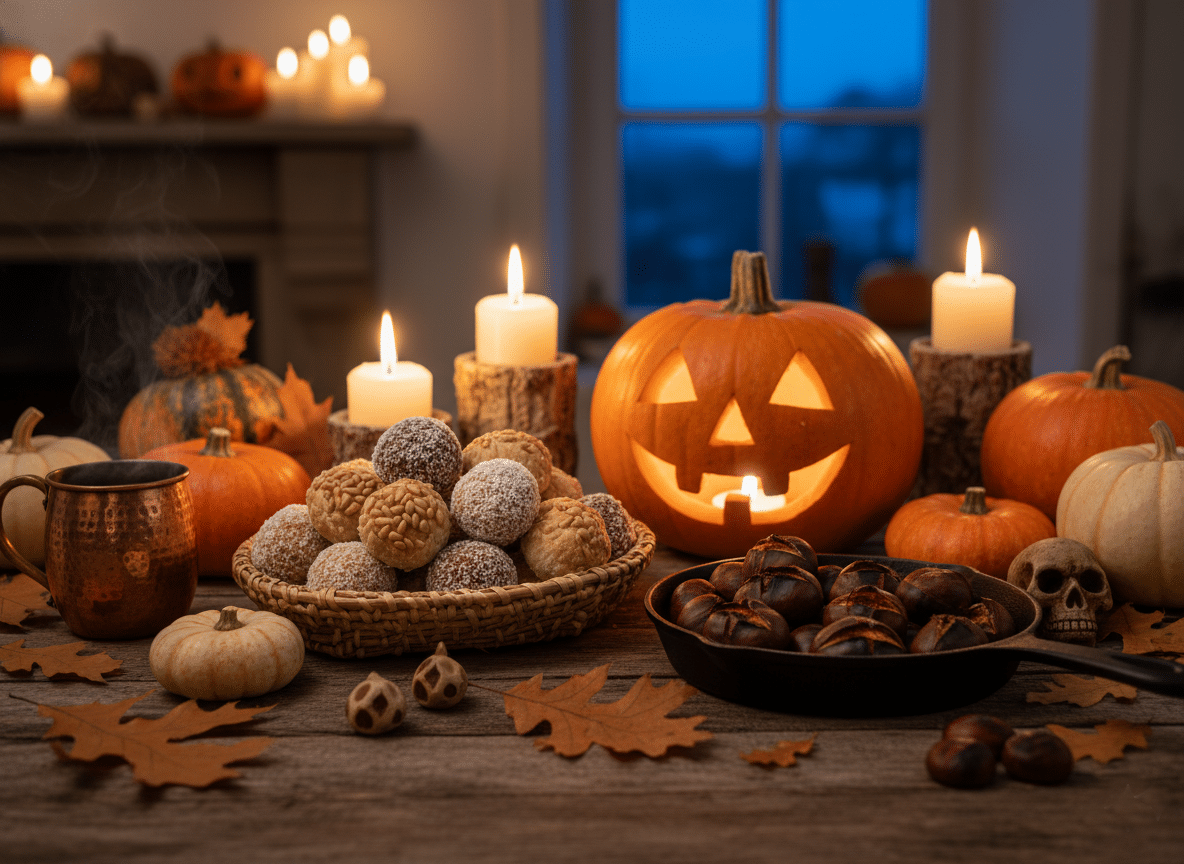
The Origins of Halloween
Long before pumpkins and trick-or-treat, Halloween began as Samhain, the ancient Celtic festival marking the end of harvest and the start of winter — “the dark half of the year.”
- The Celts believed that on the night of October 31, the veil between the living and the dead thinned, allowing spirits to cross. Bonfires were lit to protect the living and guide the souls of the departed.
- With Christianity’s spread, the Church adapted many pagan customs into All Saints’ Day (November 1) and All Souls’ Day (November 2). Samhain’s symbols — disguises, offerings, carved lights — survived in new forms.
- In the 19th century, Irish and Scottish immigrants carried these traditions to America, where pumpkins replaced turnips and “trick or treat” was born. Over time, pop culture transformed it into the global Halloween we know today — a joyful mix of folklore, creativity and fun.
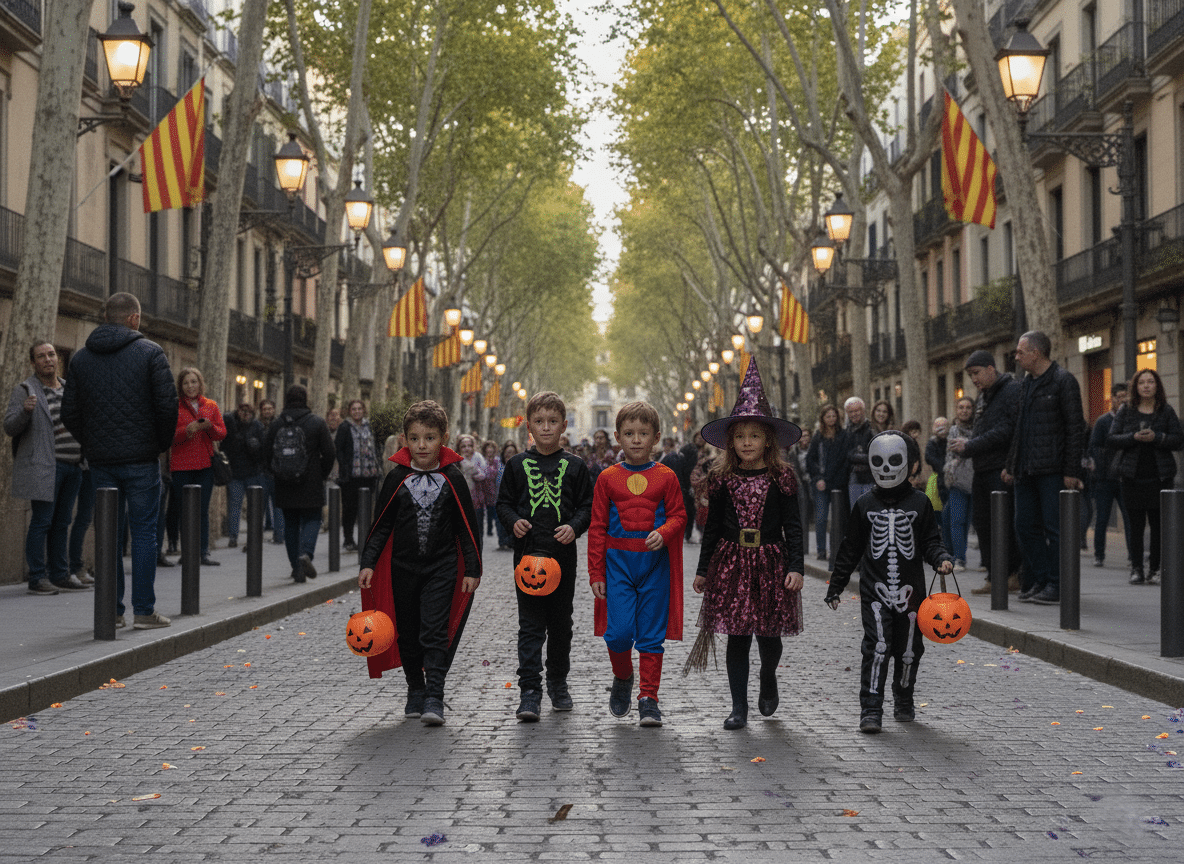
In Barcelona, Halloween has found a place in neighbourhoods and schools, especially among children and young adults. You’ll see costume parties, themed cafés, and entire homes turned into small haunted houses where people line up for a playful scare.
The Origins of La Castanyada
While Halloween travelled the world, Catalonia preserved its own seasonal celebration: La Castanyada.
This tradition dates back to the 18th century and is rooted in both harvest customs and the commemoration of the departed. In earlier centuries, families gathered on All Saints’ Eve to remember their loved ones and share warm, simple foods while church bells rang through the night. Bell-ringers, who kept vigil until dawn, were given chestnuts, sweet potatoes and wine to keep their strength — and so the menu of La Castanyada was born.
Typical foods and symbols include:
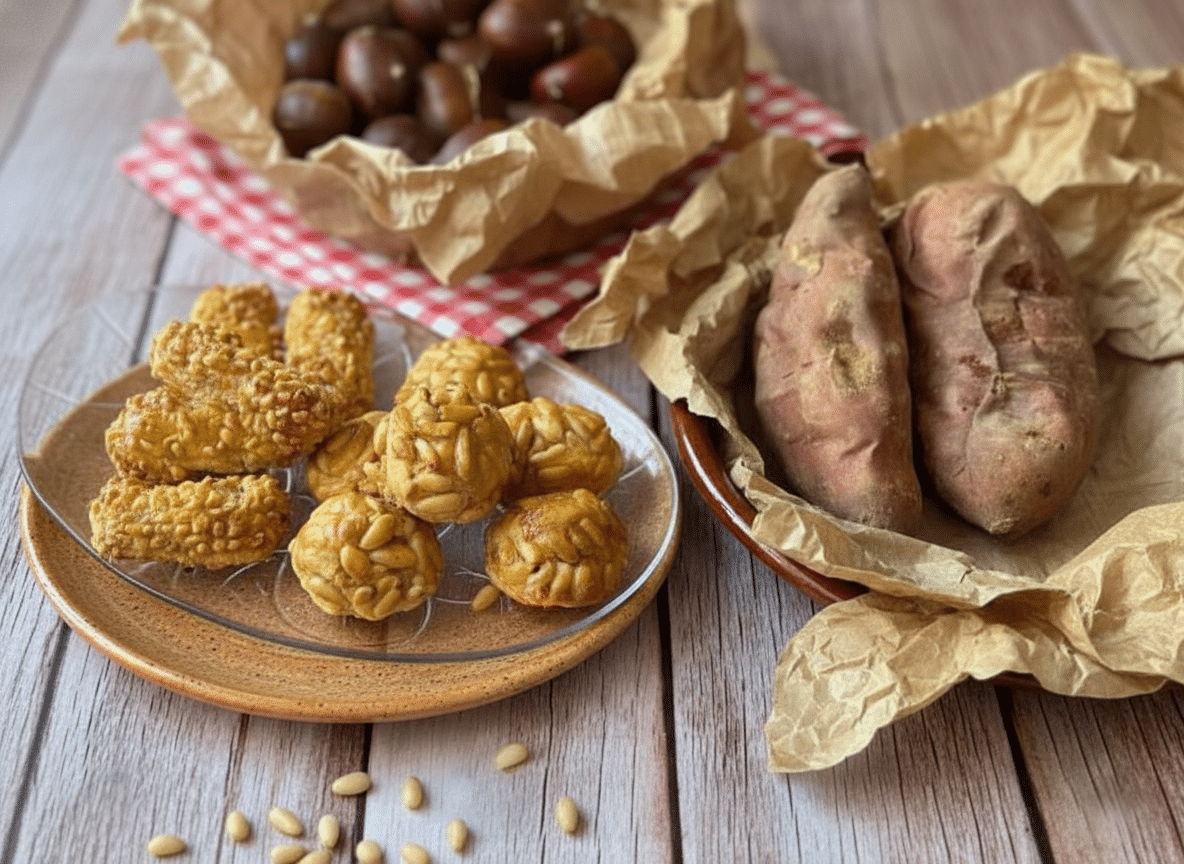
- Roasted chestnuts (castanyes), served hot in paper cones.
- Sweet potatoes (boniatos), baked slowly until caramelised.
- Panellets, small almond sweets covered in pine nuts, coconut or candied fruit — a true taste of Catalan tradition.
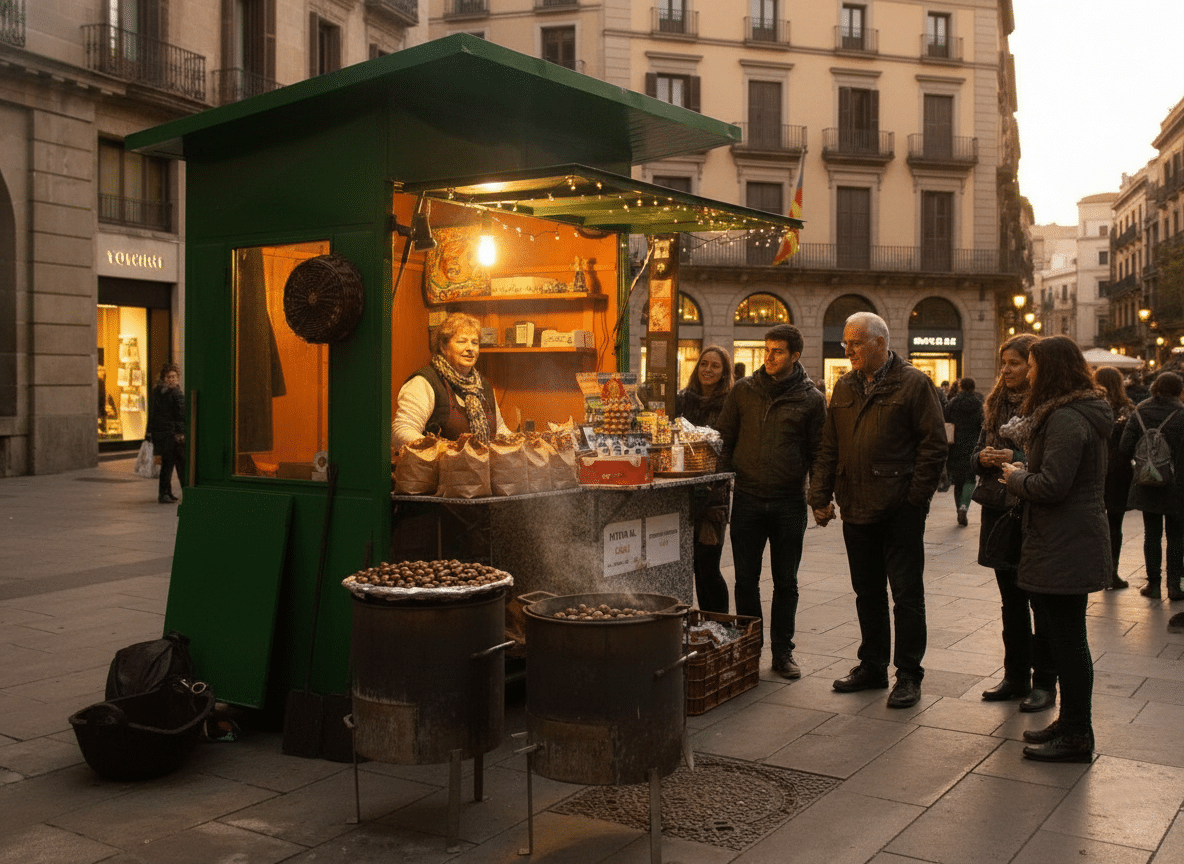
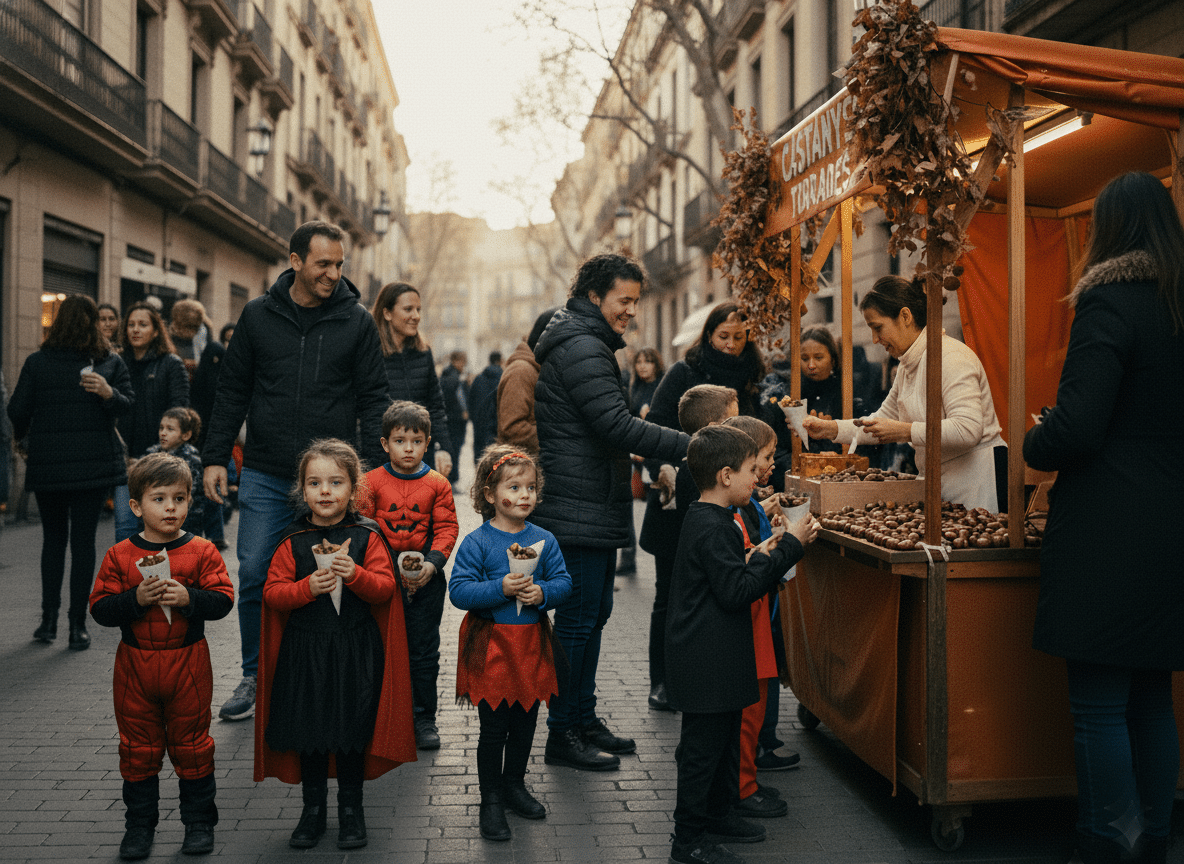
- The Castanyera, the beloved street vendor who sells chestnuts wrapped in newspaper, symbolising warmth, community and the changing of the season.
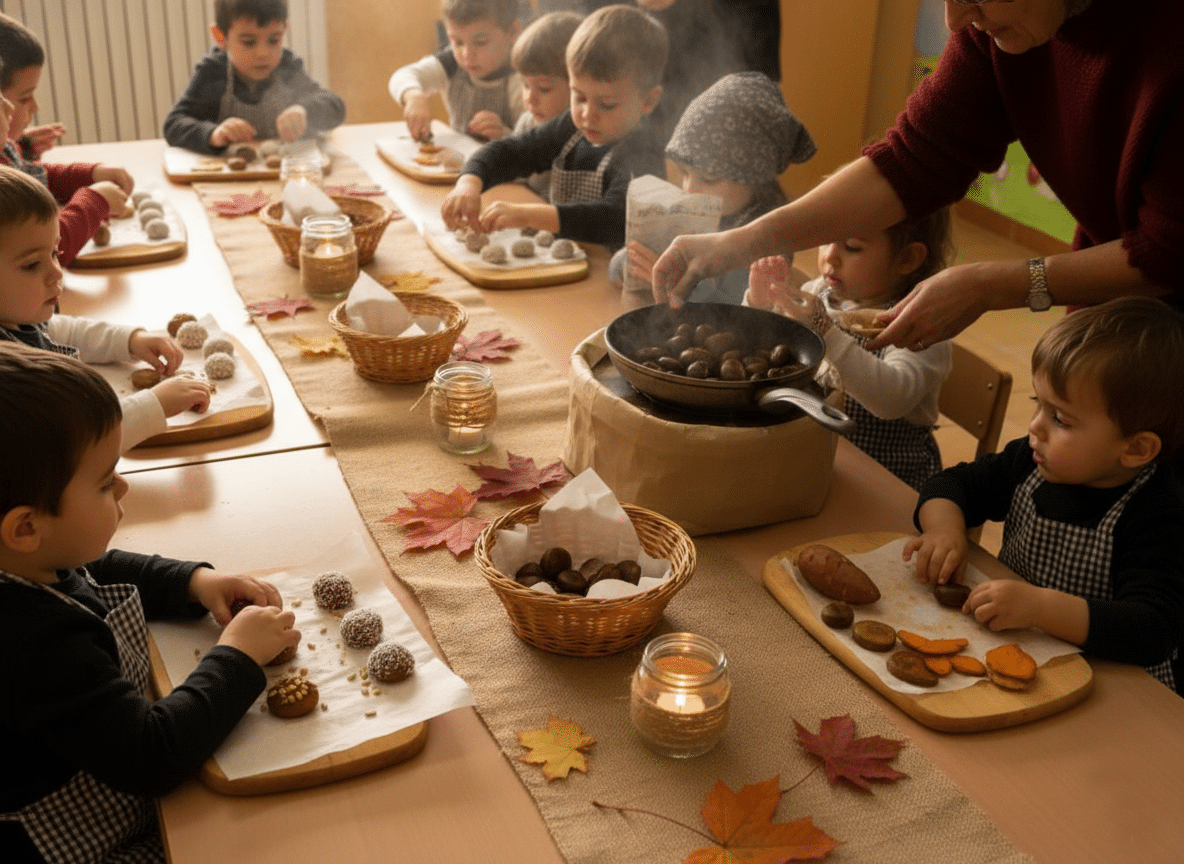
La Castanyada is still celebrated everywhere in Catalonia — especially in schools, where children bake panellets, perform little plays about the Castanyera, and learn songs that keep the custom alive. It’s both a festive and an educational week devoted to Catalan culture.
How the Two Traditions Coexist in Barcelona
Today in Barcelona, Halloween and La Castanyada blend harmoniously, reflecting the city’s open and creative spirit.
Throughout the last week of October, schools and cultural centres devote activities to tradition: baking panellets, decorating classrooms with autumn leaves, and dramatizing the story of the Castanyera. Teachers use this week to teach children about local roots and seasonal customs.
Then, when October 31 arrives, the atmosphere shifts — the afternoon fills with costumes, laughter and “trick or treat.” Many families and friends walk through their neighbourhoods collecting sweets. Some houses prepare elaborate decorations or even small “haunted rooms” where visitors queue to enter and enjoy a harmless fright.
Meanwhile, on the same streets, the comforting scent of roasted chestnuts rises from dozens of stalls. You’ll see couples, families and students gathered around paper cones of warm castanyes and boniatos. In many towns, older students or scout groups set up these stands to raise funds for their end-of-year trips — a sweet example of community tradition meeting youthful energy.
This coexistence tells a beautiful story: Barcelona doesn’t replace traditions; it layers them, adding new colours to an already rich cultural canvas.
What to Experience on a Cultural Tour with Us
Choosing a private tour with Barcelona Private Tour Guide means far more than ticking landmarks off a list — it means living Catalonia through its stories, flavours and people.
On your journey with us, you will:
- Discover the stories hidden behind traditions and everyday scenes, from seasonal markets and artisan workshops to centuries-old neighbourhood rituals that still define Catalan life.
- Stroll through historic streets where every arch and square holds a piece of the city’s evolving soul — from medieval trade routes to modernist masterpieces.
- Sense the rhythm of Catalonia’s seasons: the aroma of autumn panellets, spring’s floral festivals, summer’s street celebrations, or winter’s quiet devotion.
- Visit iconic landmarks with new eyes — especially the Sagrada Família, where our guide Javier brings Gaudí’s genius to life. His deep knowledge and passion transform architecture into an intimate, emotional experience.
- Connect with the human side of heritage, meeting artisans, vendors and locals who keep Barcelona’s traditions alive.
- Experience culture as a living story, not a museum display — through tastes, sounds and encounters that reveal the authentic heartbeat of Catalonia.
Practical Tips for Autumn Visitors
- Chestnut and sweet-potato stalls appear across the city from mid-October — look for them in plazas, near schools and along La Rambla.
- Local bakeries display a wide variety of panellets in late October.
- If visiting during this season, enjoy both worlds: sample chestnuts during the day and explore Halloween festivities at night.
- Any time of year, combine cultural discovery with art and architecture — our private tours adapt to your interests and pace.
FAQs
What is La Castanyada?
La Castanyada is a traditional Catalan celebration held on October 31 and November 1, marking the arrival of autumn and honouring the memory of loved ones. Families gather to eat roasted chestnuts, panellets (almond sweets), and sweet potatoes while sharing stories and warmth.
When and where can I experience La Castanyada in Barcelona?
The celebration peaks around the end of October. You’ll find chestnut and boniato stalls on many corners of Barcelona — along busy avenues, near markets, and outside schools. Local bakeries sell panellets, and many neighbourhoods and towns host small Castanyada fairs.
What are panellets and why are they so special?
Panellets are traditional Catalan sweets made with almond paste and coated with pine nuts or other toppings. They are usually homemade and symbolize togetherness, since families and schools prepare them during the week leading up to All Saints’ Day.
How do Catalans celebrate Halloween?
Across Catalonia, Halloween has become a lively complement to La Castanyada. In cities, towns and villages alike, children dress up in costumes, go door to door collecting sweets, and visit houses transformed into small haunted spaces. Families enjoy both traditions side by side — Halloween for fun, and La Castanyada for warmth and heritage.
How do both celebrations coexist?
Catalans balance both traditions beautifully. During the week, schools focus on cultural heritage — baking panellets, performing plays, and celebrating the Castanyera. On the evening of October 31, families enjoy Halloween activities while still sharing chestnuts and autumn flavours that honour the Castanyada spirit.
Why do some students sell chestnuts in October?
Many older students or scout groups organize chestnut and sweet-potato stalls to raise funds for their school trips or end-of-year projects. It’s a lovely community gesture that keeps tradition alive while supporting education.
Can I experience these traditions if I visit at another time of year?
Absolutely. While the Castanyada itself is seasonal, Catalan culture celebrates food, family and creativity all year long. On a private tour, you’ll uncover stories of tradition, architecture and local life — from Gaudí’s masterpieces to hidden markets and artisan workshops that embody the same cultural spirit.
Autumn in Barcelona: More Than a Season, a Story
Autumn in Barcelona is a celebration of contrasts — ancient and modern, local and global, sacred and playful. Whether you’re wandering through streets scented with roasted chestnuts or passing by children in costumes, you are witnessing the living spirit of Catalonia: proud of its roots, yet open to the world.
At Barcelona Private Tour Guide, every walk is designed to reveal that essence — not just what you see, but what you feel. And if your visit includes the Sagrada Família with Javier, expect an experience that goes beyond sightseeing — one that connects architecture, culture and soul in a uniquely Catalan way.
🍁 Bona Castanyada — and Happy Halloween!