


The Milestone: 155.5 Meters Above the City
The year 2026 will not only mark a technical achievement but also a historic celebration: the Sagrada Familia plans to complete the central Jesus Tower in time for the centenary of Antoni Gaudí’s death. The unveiling is expected to be one of the centerpiece events of the commemoration, with cultural and religious ceremonies already being prepared, including the potential presence of Pope Leo XIV. This broader context adds even more weight to the July 2025 milestone.
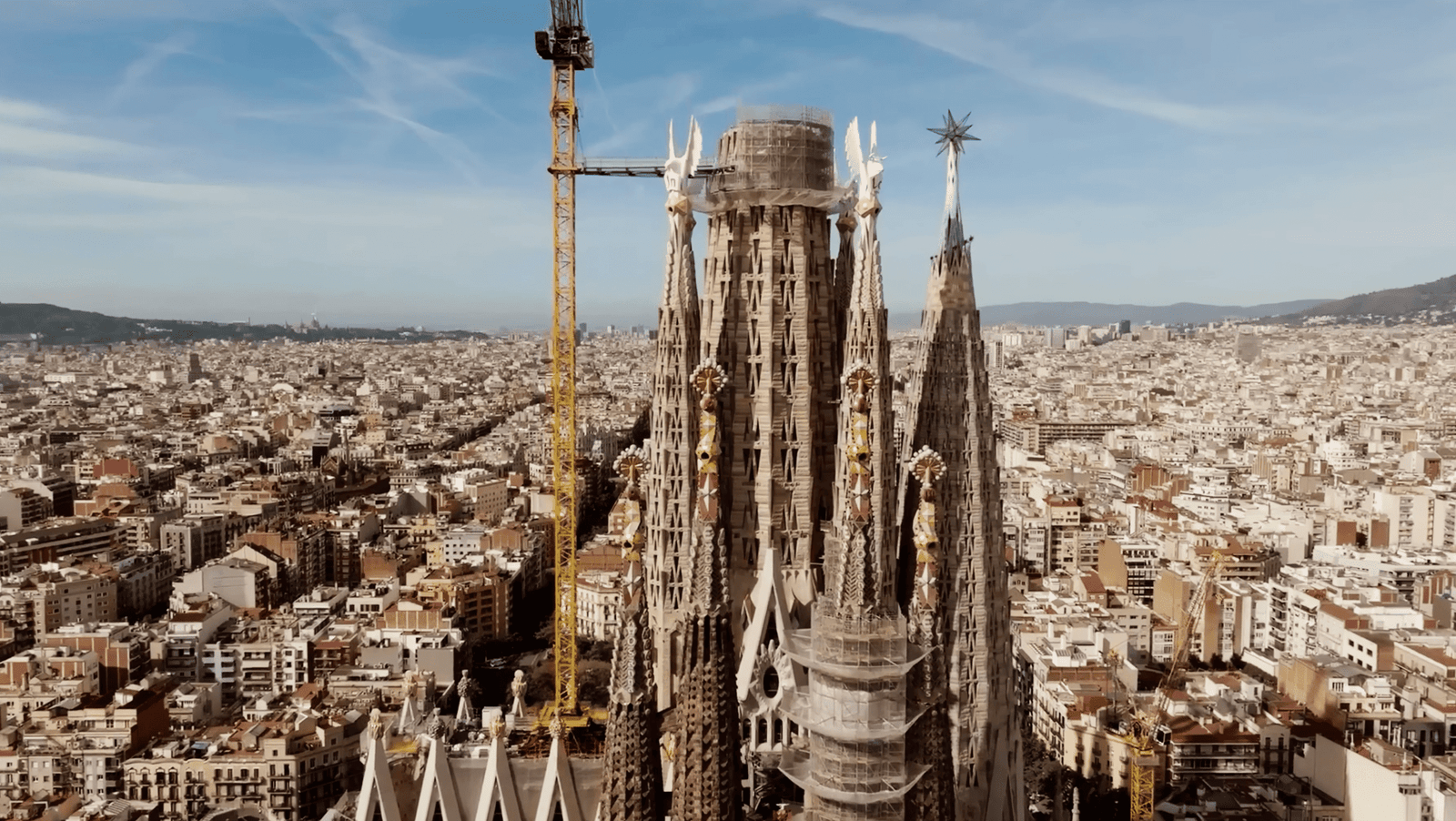
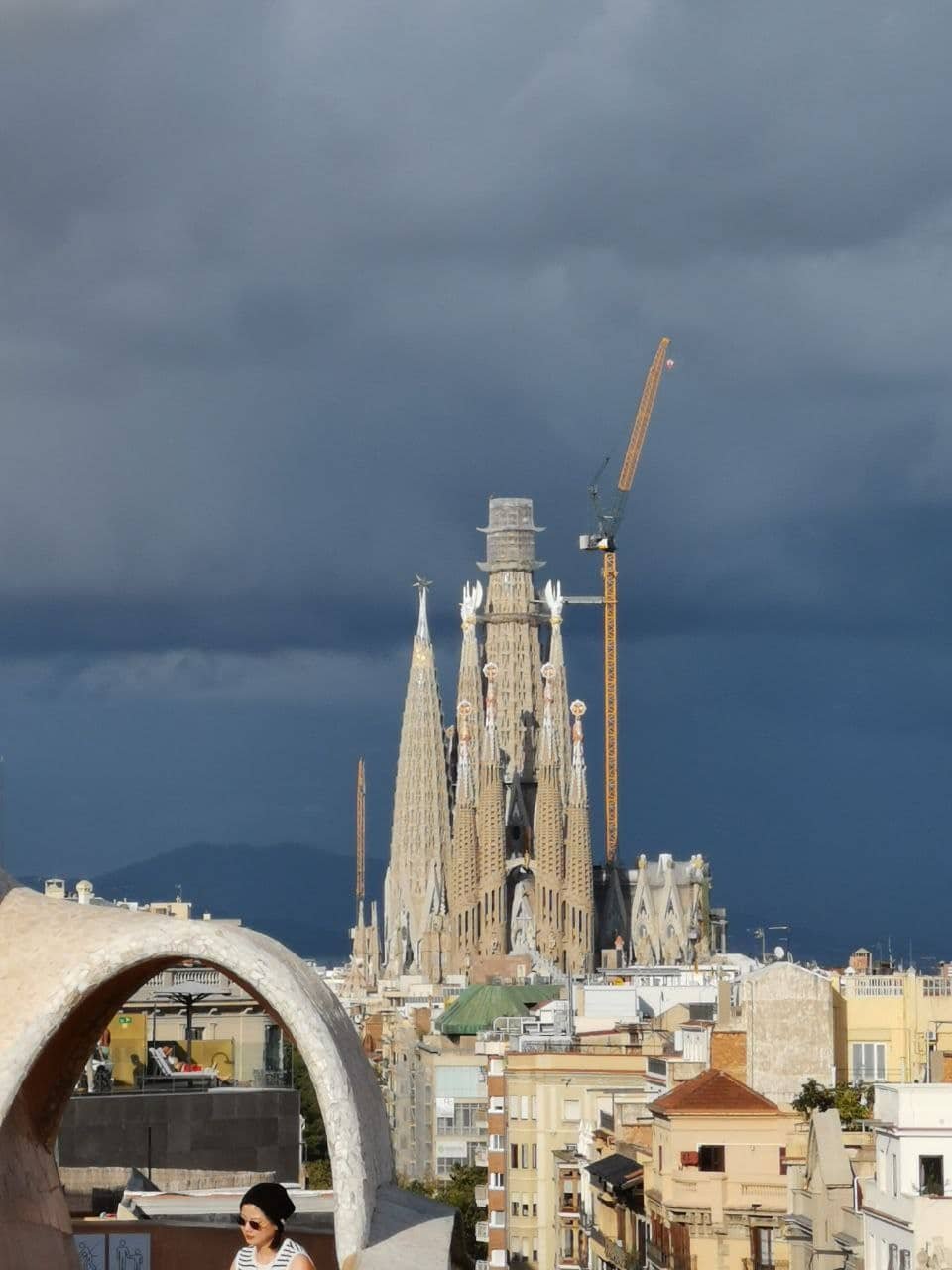
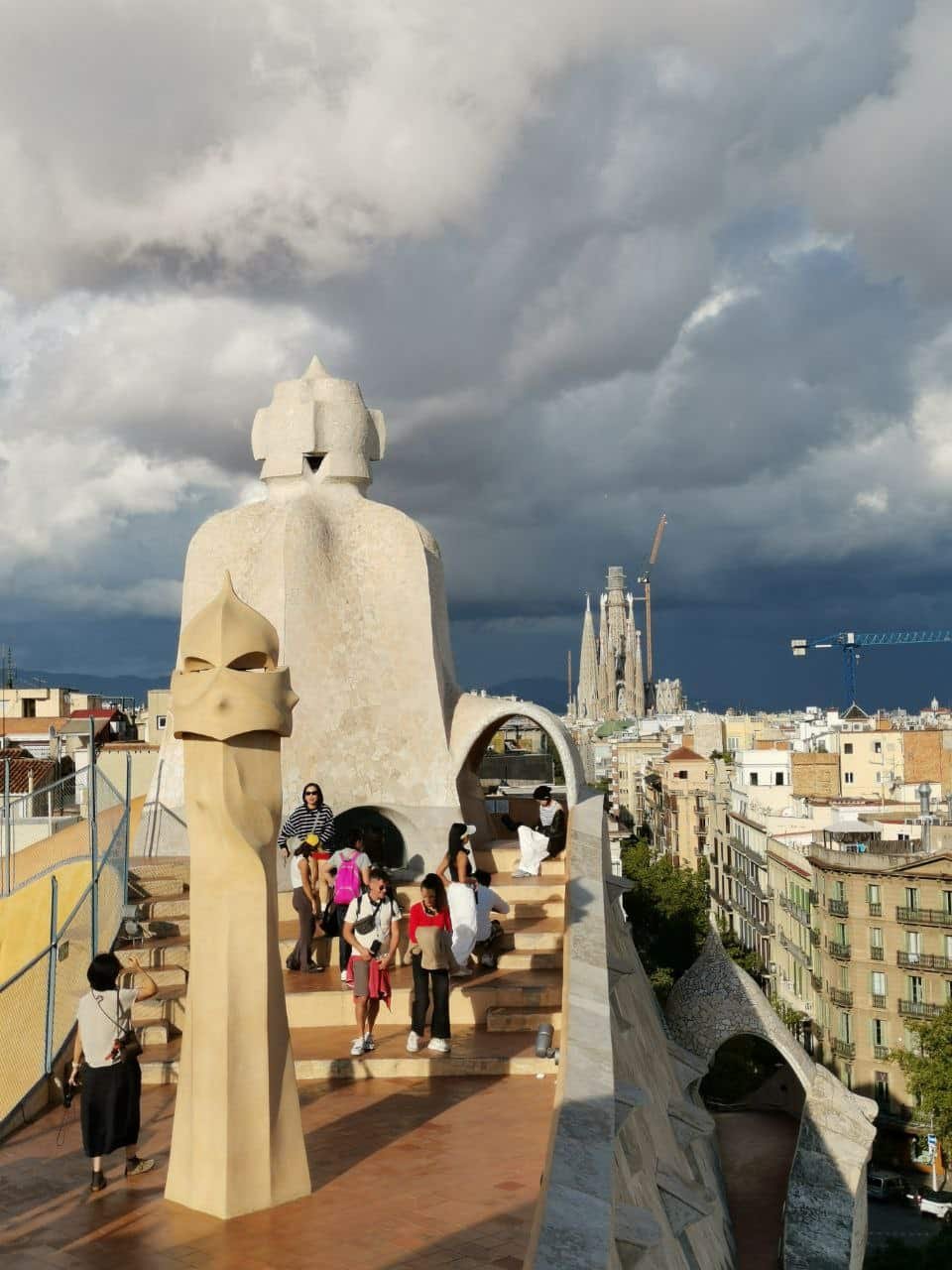
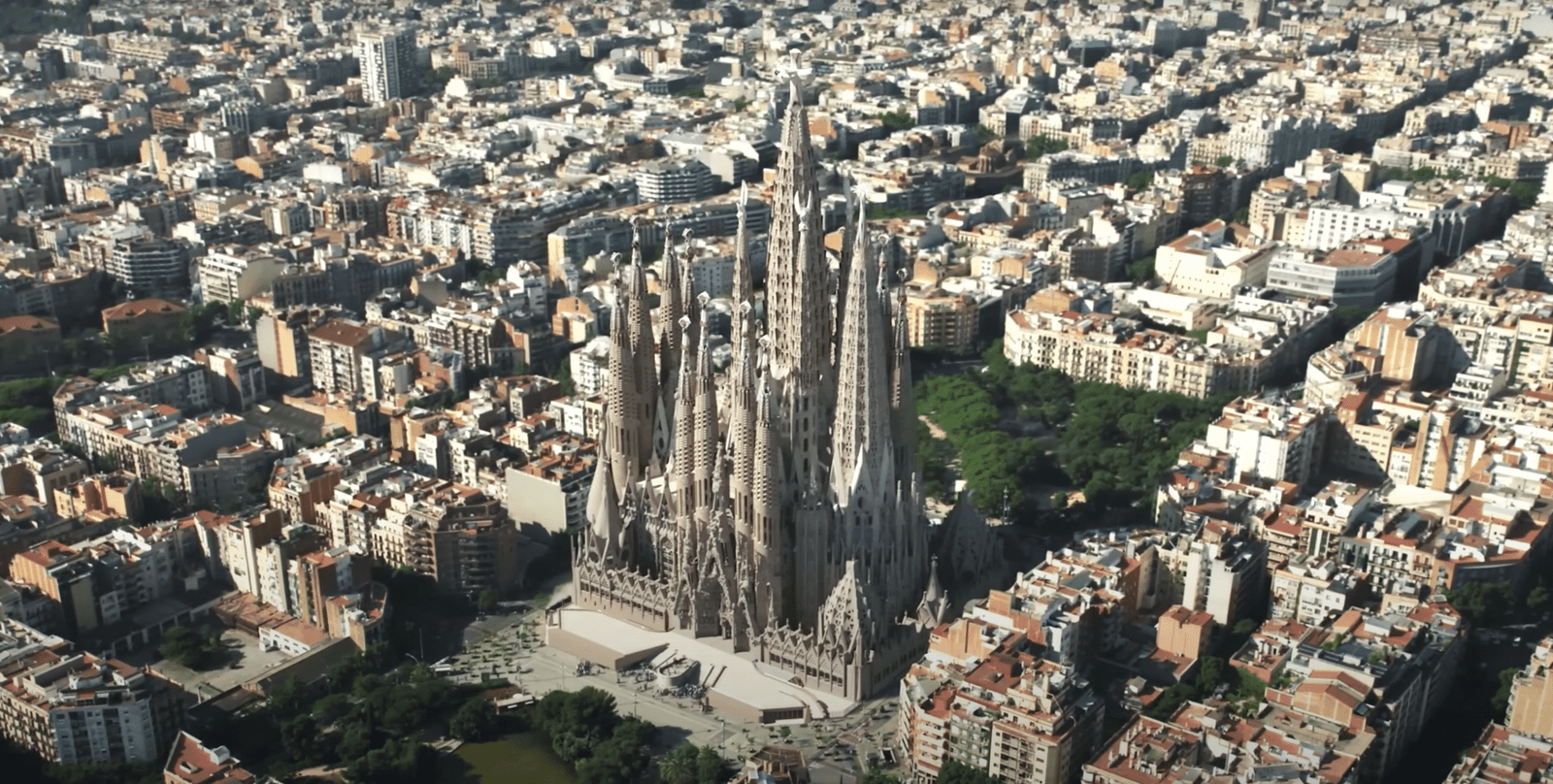
Barcelona held its breath in late July 2025 as the Jesus Tower of the Sagrada Familia pierced the sky at 155.58 meters. In that instant, the basilica seized the crown as the tallest building in the city’s urban core, dethroning Hotel Arts and Torre Mapfre—giants of 154 meters that had ruled the skyline since the 1992 Olympics.
Only the distant Collserola Tower (288 m, perched on the hills) now stands taller. This leap skyward is not just about numbers; it is a dramatic new chapter in Antoni Gaudí’s quest to fuse faith, engineering, and artistry into one awe‑inspiring vision.
A Tower Still Rising: The Road to 172.5 Meters
Timeline of the Construction Progress (2019–2025)
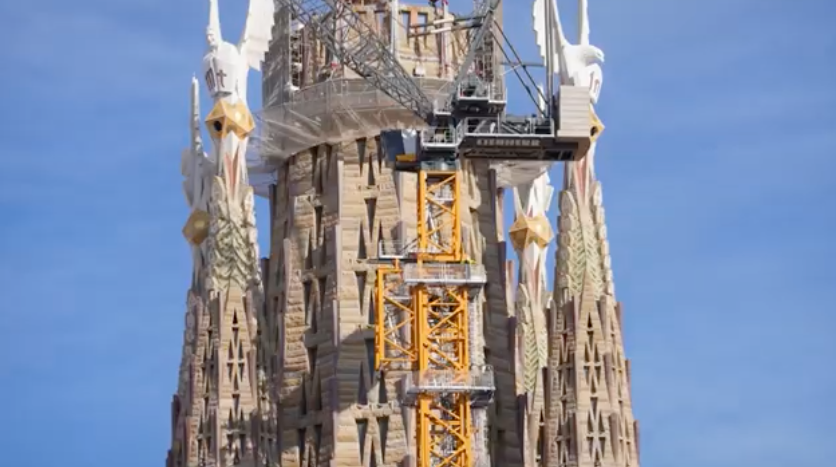
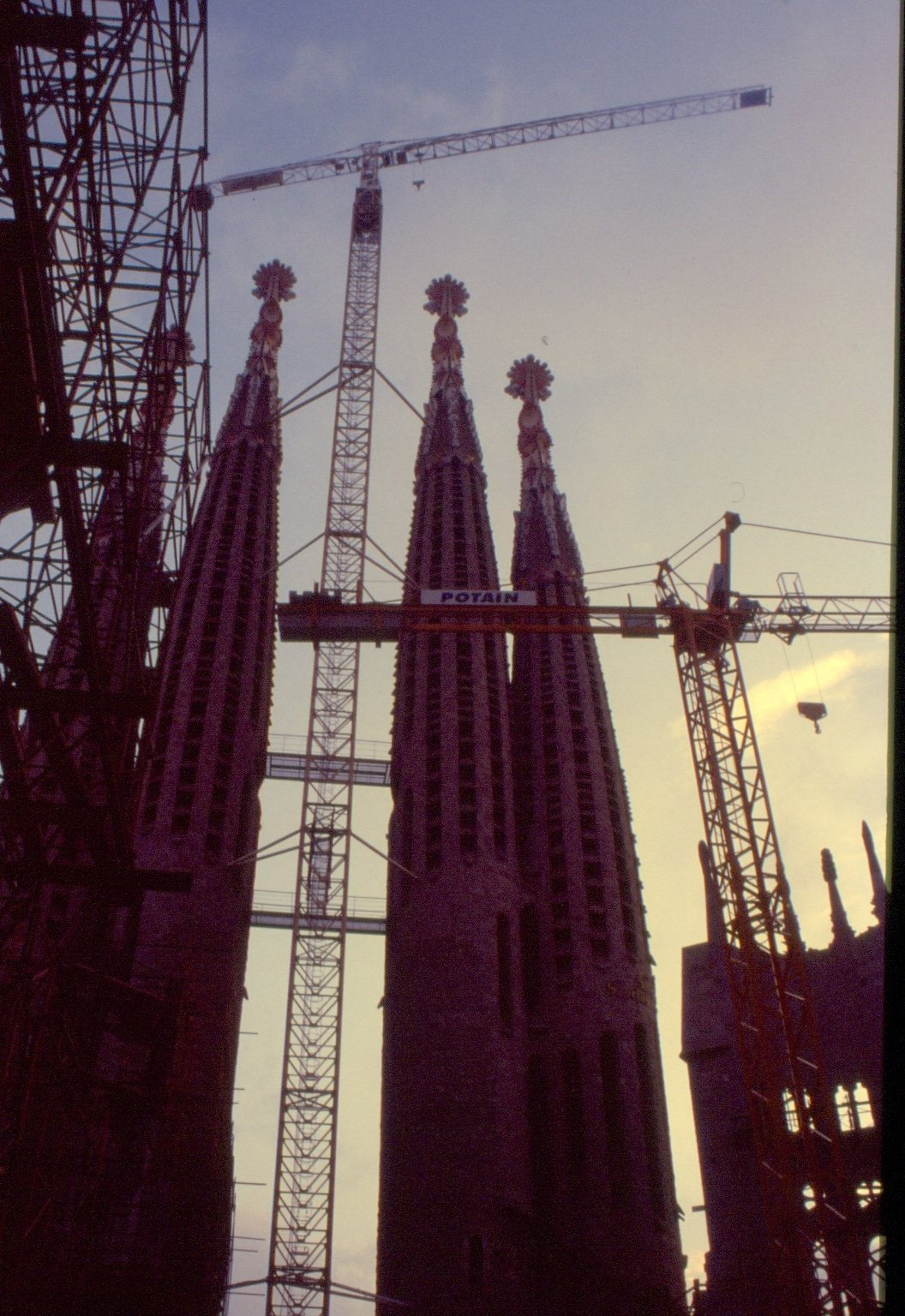
Work on the Jesus Tower has been steadily advancing since 2019, when the stone core was initiated at 85 meters. Over the past six years, level by level, the tower has grown into Barcelona’s most iconic vertical landmark.
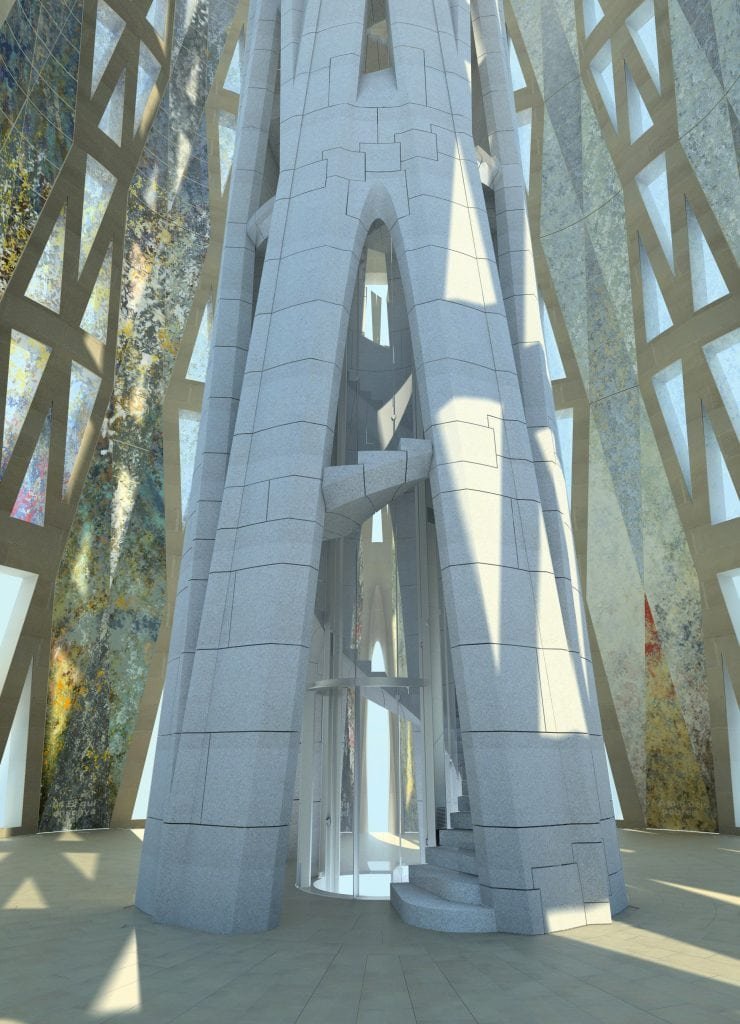
In April 2025, builders installed a stone platform at 143.5 meters, completing the inner core and linking it with the exterior structure. This was a key milestone, as it unified the spiral stone staircase inside with the outer body of the tower. At this stage, the geometry shows Gaudí’s trademark paraboloid shapes and triangular windows. In essence: April 2025 marked the moment when the tower’s stone heart was sealed and visually connected inside and out.
The Latest Achievement: Stone Platform at 143.5 Meters
The placement of the platform at the twelfth level marks the last stage where stone dominates as the primary material. The upper terminal, still under construction, will incorporate decorative elements in trencadís mosaics, ceramics, and glass, staying faithful to Gaudí’s design principles.
Inside, the staircase widens as it ascends, while the tower narrows—creating a striking visual and structural fusion at the twelfth level.
Construction of the Cross Terminal (May 2025)
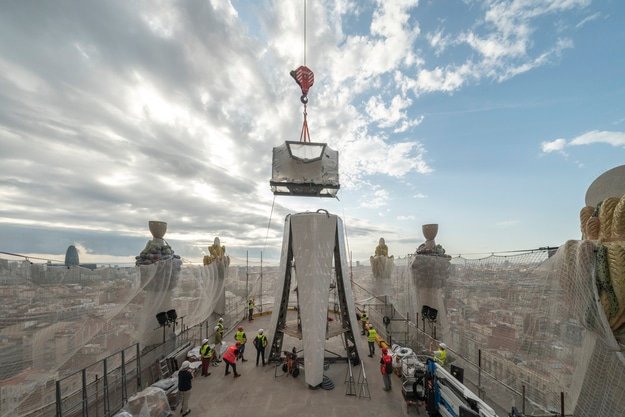
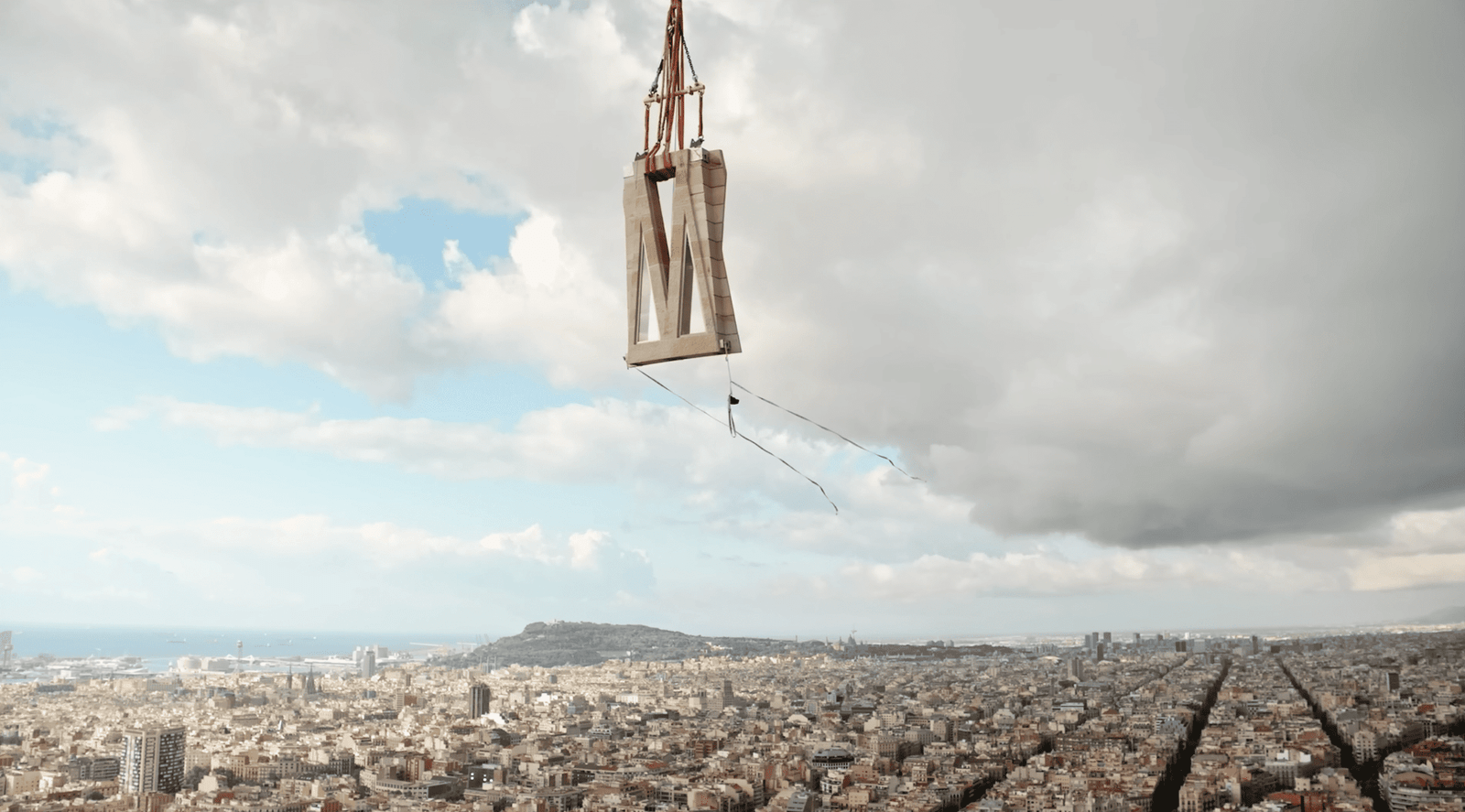
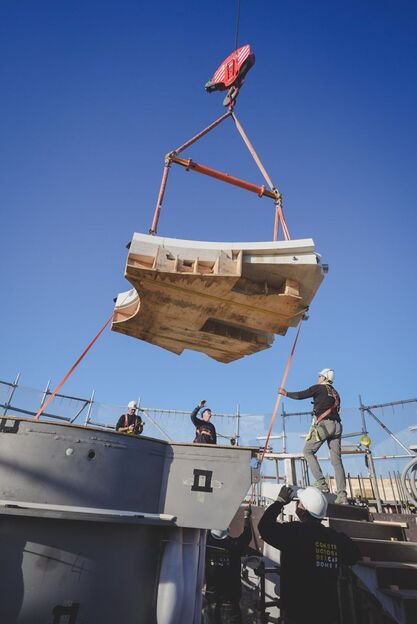
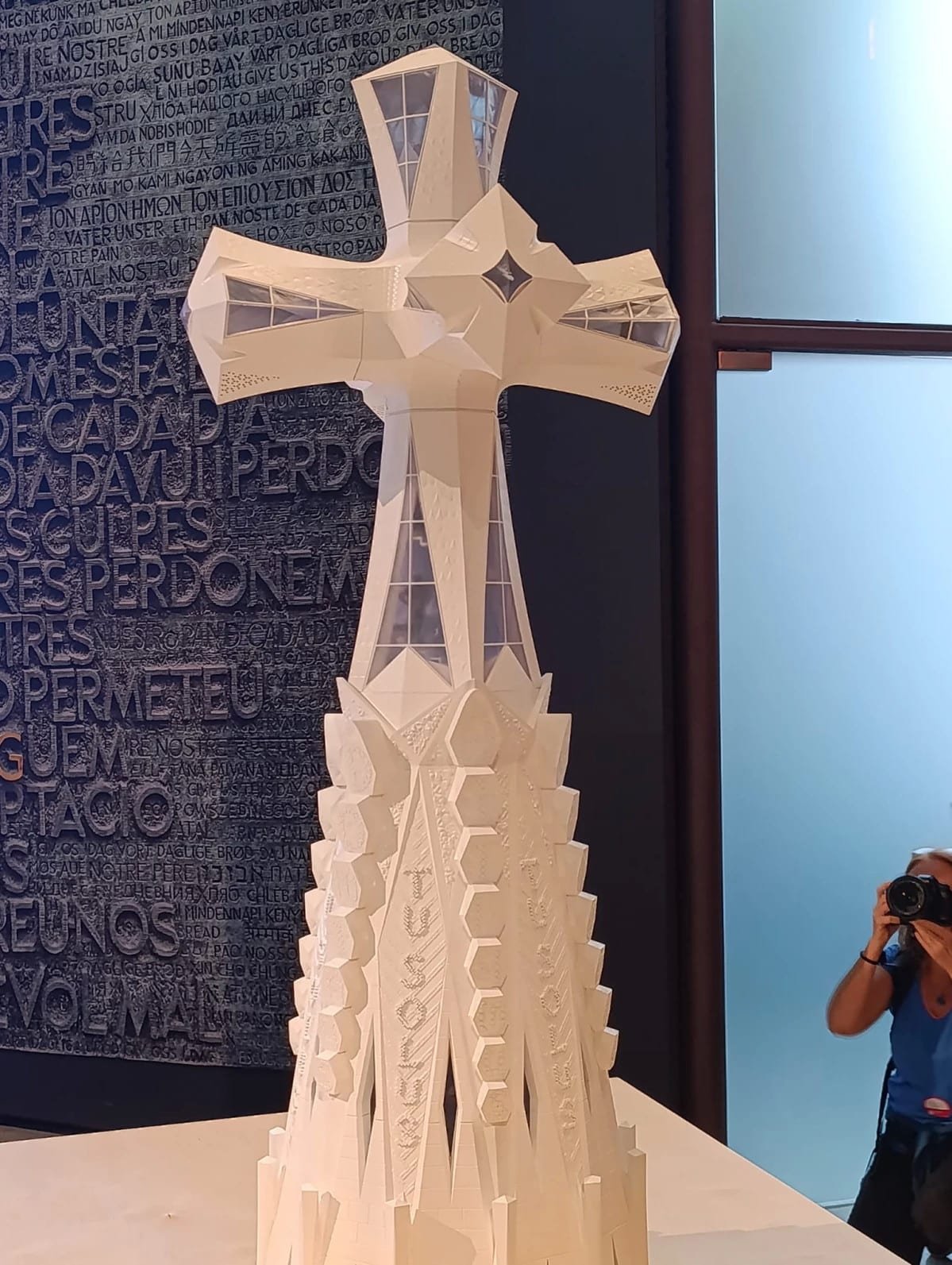
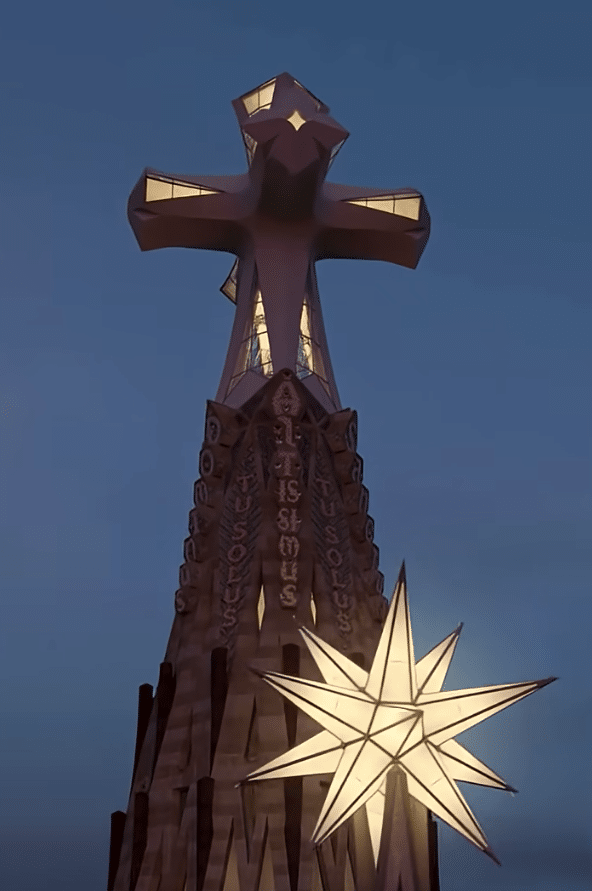
In May 2025, work began on placing the lower terminal panels of the Jesus Tower, which form the base that will later support the monumental cross. These panels are decorated with colored ceramics representing palms and inscribed with the words Tu solus Sanctus, tu solus Dominus, tu solus Altissimus (“You alone are the Holy One, You alone are the Lord, You alone are the Most High”), along with Amen and Alleluia. Inside, the terminal incorporates trencadís mosaics and ornamental details, staying true to Gaudí’s style. In short: May 2025 laid the foundation for the cross, combining structure, faith, and artistic symbolism.
Arrival of the Cross Pieces (July–September 2025)
From summer 2025 onwards, several shipments brought the monumental pieces of the cross that will crown the tower:
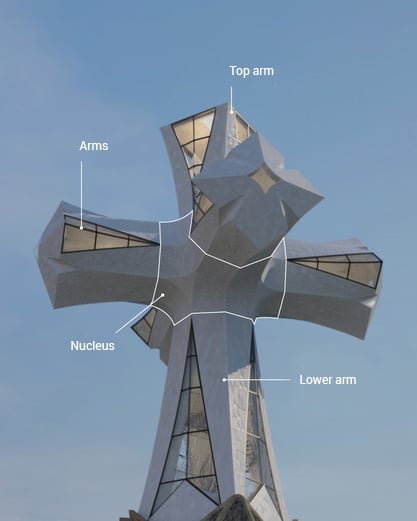
- July 2025: The first elements of the cross arrived on site. These were the pieces of the lower arm of the cross. Four separate elements were assembled in situ at the basilica, at a working platform 54 meters above ground. Once fitted with glass inserts and interior details, the entire lower arm was lifted into place. In short: July marked the symbolic beginning of the cross taking shape above the tower.
- August 2025: The first lateral arm of the cross was received and installed. This delivery followed the lower arm pieces and marked the continuation of assembly work with colored glass and ornamental details. In summary: by August, the cross was visibly expanding with its first arm in place.
- September 2025: The central core of the cross arrived in two large pieces, transported through Carrer de Mallorca and set down at the 54‑meter platform for assembly. The foundation emphasized its importance: the core is the structural element that connects the four arms, and it will also serve as the endpoint of the inner staircase, from which visitors will eventually access each arm of the cross. To sum up: September brought the heart of the cross, the piece that makes the entire structure possible.
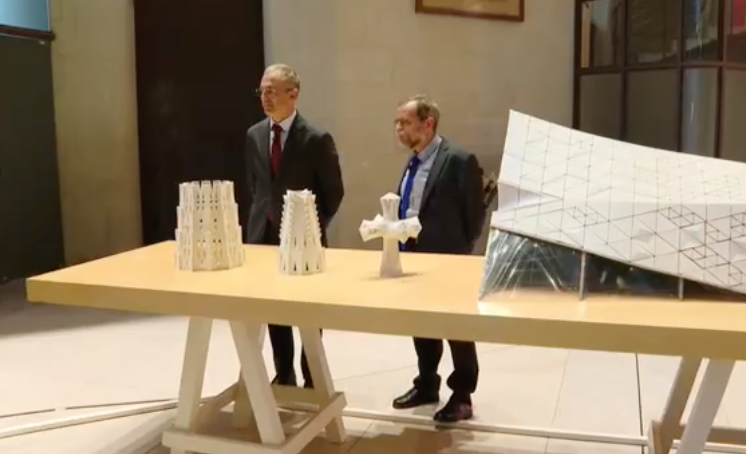
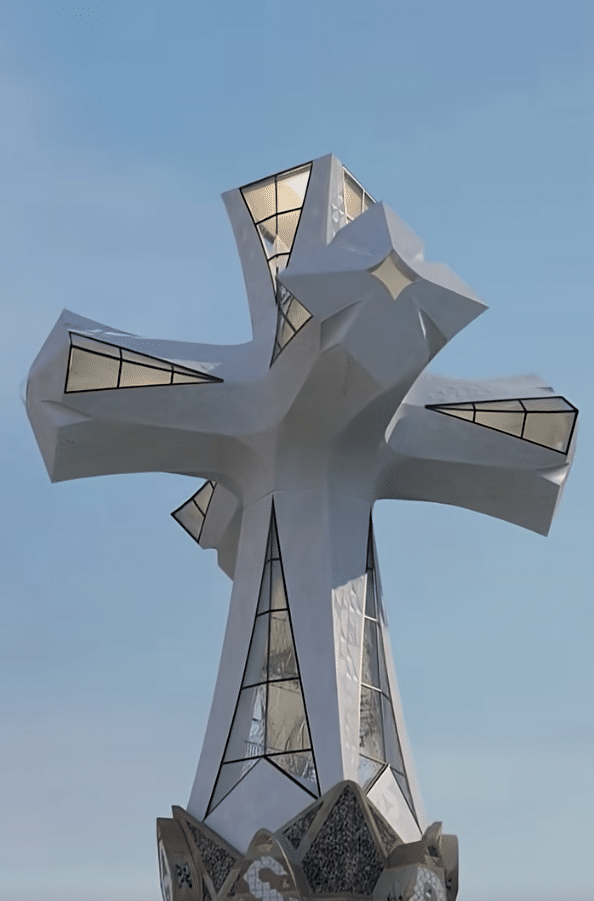
When completed, the cross will rise 17 meters high and 13.5 meters wide, making it the defining feature of the tower and a visible symbol from across Barcelona.
Symbolism and Vision of Gaudí
Why the Tower Will Not Surpass Montjuïc
Gaudí, a devout Catholic, insisted that his masterpiece should never rise higher than God’s creation. That is why the Jesus Tower will ultimately reach 172.5 meters—slightly lower than Montjuïc hill (177.7 m). This symbolic decision ensures that the basilica, despite its magnificence, remains humble in the face of nature.
The Design of the Cross and Its Meaning
The crowning cross is more than an architectural element—it is a profound symbol of faith. Covered with colored glass and ceramic mosaics, it will shine under Barcelona’s sun by day and glow softly at night, visible from all over the city. For Gaudí, it was meant to represent both a beacon of Christianity and a connection between earth and heaven. In short: the cross is not just decoration, but the soul of Gaudí’s vision, uniting sky, city, and faith in one shining symbol.
When Will It Be Completed?
According to the official Sagrada Família foundation and recent announcements in Catalan media, the central Jesus Tower is scheduled to be completed in 2026, to coincide with the centenary of Antoni Gaudí’s death. Esteve Camps, president delegate of the construction board, and chief architect Jordi Faulí confirmed that the upper arms of the cross will be placed in the early months of 2026, with the goal of unveiling the completed tower without scaffolding by June of that year. The inauguration is expected to be one of the central acts of the centenary, for which the Vatican has even been asked to secure the presence of Pope Leo XIV.
Alongside the Jesus Tower, work is also advancing on the Chapel of the Assumption, with new façades and sculptures by artists Mercè Riba, Béatrice Bizot, and Teresa Riba set to be completed in 2026. The commemorative program will include academic, musical, and liturgical events, culminating in a special mass on June 10, the anniversary of Gaudí’s death.
However, the viewing platform inside the cross will not open to visitors immediately. Current projections indicate that public access will begin in 2027, once safety measures and access infrastructure are ready.
When completed, the Sagrada Familia will surpass Germany’s Ulm Cathedral (162 m) to become the tallest church in the world.
What This Means for Barcelona
A New Landmark in the Urban Skyline
Barcelona’s skyline has changed forever. For over three decades, Hotel Arts and Torre Mapfre defined the modern city’s profile. Now, the Jesus Tower of the Sagrada Familia reclaims that honor for a cultural and spiritual monument, reinforcing the city’s identity.
Between Heritage and Modern Challenges
The tower’s progress has not been without debate. Beyond engineering feats, the basilica faces urban challenges—most notably the controversial plans for the Glory façade staircase, which could involve the demolition of nearby residential blocks. Despite these challenges, the Sagrada Familia continues to unite global admiration as a UNESCO World Heritage site and a living work-in-progress. In short: Barcelona gains not only a taller skyline, but also a reminder of how history, faith, and modern city life constantly intersect.

Discover the Sagrada Familia With an Expert
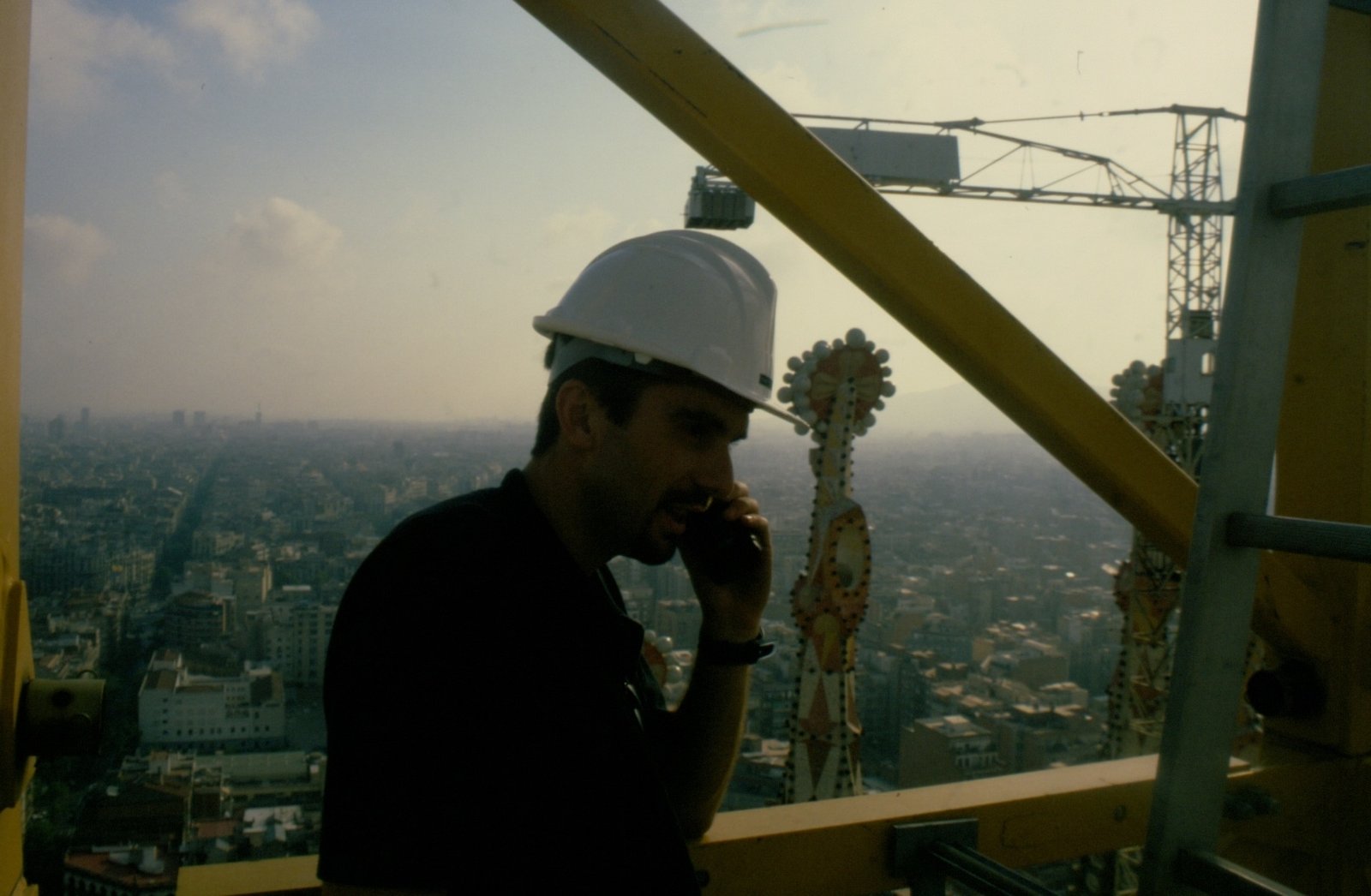
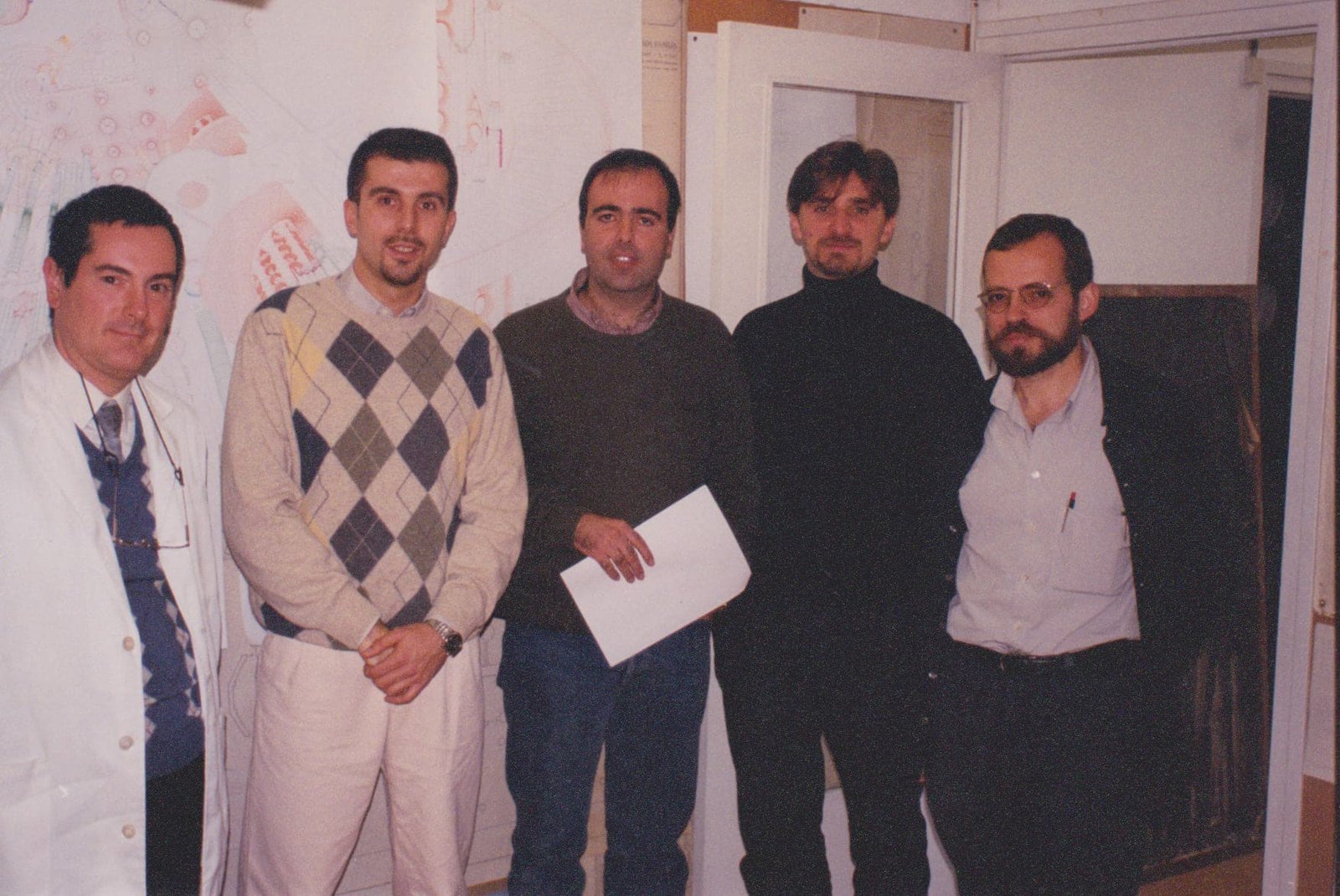
If you want to experience the Sagrada Familia beyond the headlines—through the eyes of someone who has worked inside the basilica alongside its architects and sculptors—consider booking a tour with Javier, our expert local guide.
FAQs
How tall is the Sagrada Familia now?
As of July 2025, the Jesus Tower stands at 155.58 meters, making it the tallest building in Barcelona’s city center.
When will the Sagrada Familia be finished?
The central Jesus Tower is planned to be completed in 2026, as part of the centenary of Gaudí’s death. This does not mean the entire basilica will be finished: decorative works, the Glory façade, and other elements will continue for years. Public access to the viewing platform at the top of the Jesus Tower is projected for 2027 once safety and visitor facilities are in place.
Is visiting the Sagrada Família worth it?
Absolutely. Beyond its record-breaking height, it offers a one‑of‑a‑kind experience of Gaudí’s architecture, colored light, and symbolism. Most visitors consider it a highlight of their trip to Barcelona. In short: it’s not just a building, but an unforgettable encounter with art and spirituality.
Why is the tower not higher than Montjuïc?
Gaudí believed no man-made structure should exceed God’s creation, so he set the tower’s height just below that of Montjuïc hill.
How long has the Sagrada Familia been under construction?
The project began in 1882, making it one of the longest-running architectural works in modern history.
How many towers will the basilica have in total?
When completed, the Sagrada Familia will feature 18 towers: 12 dedicated to the apostles, 4 to the evangelists, one to the Virgin Mary, and the tallest to Jesus Christ.
Can visitors already enter the Jesus Tower?
Not yet. While construction is advancing, public access to the Jesus Tower’s viewpoint is expected in 2027 once safety and infrastructure are complete.
How many visitors come to the Sagrada Familia each year?
Before the pandemic, the basilica welcomed around 4.5 million visitors annually, making it one of the most visited monuments in Europe.
Do I need to buy tickets in advance?
Yes. Tickets to the Sagrada Familia often sell out, especially in high season. It is strongly recommended to purchase them online well ahead of your visit to secure a preferred time slot and avoid long queues. For the most reliable prices and availability, it is best to buy directly from the official Sagrada Familia website, and avoid third‑party resellers.
Continue Reading
If you enjoyed this article and want to dive deeper into the fascinating story of Gaudí’s masterpiece, don’t miss our related post. It explores the origins of the project, why construction has lasted for more than 140 years, and what makes each stage so symbolic:
Why the Sagrada Família is Still Under Construction (And Why That’s Fascinating)