


On February 20, 2026, something happened in Barcelona that many of us had been waiting for years to witness.
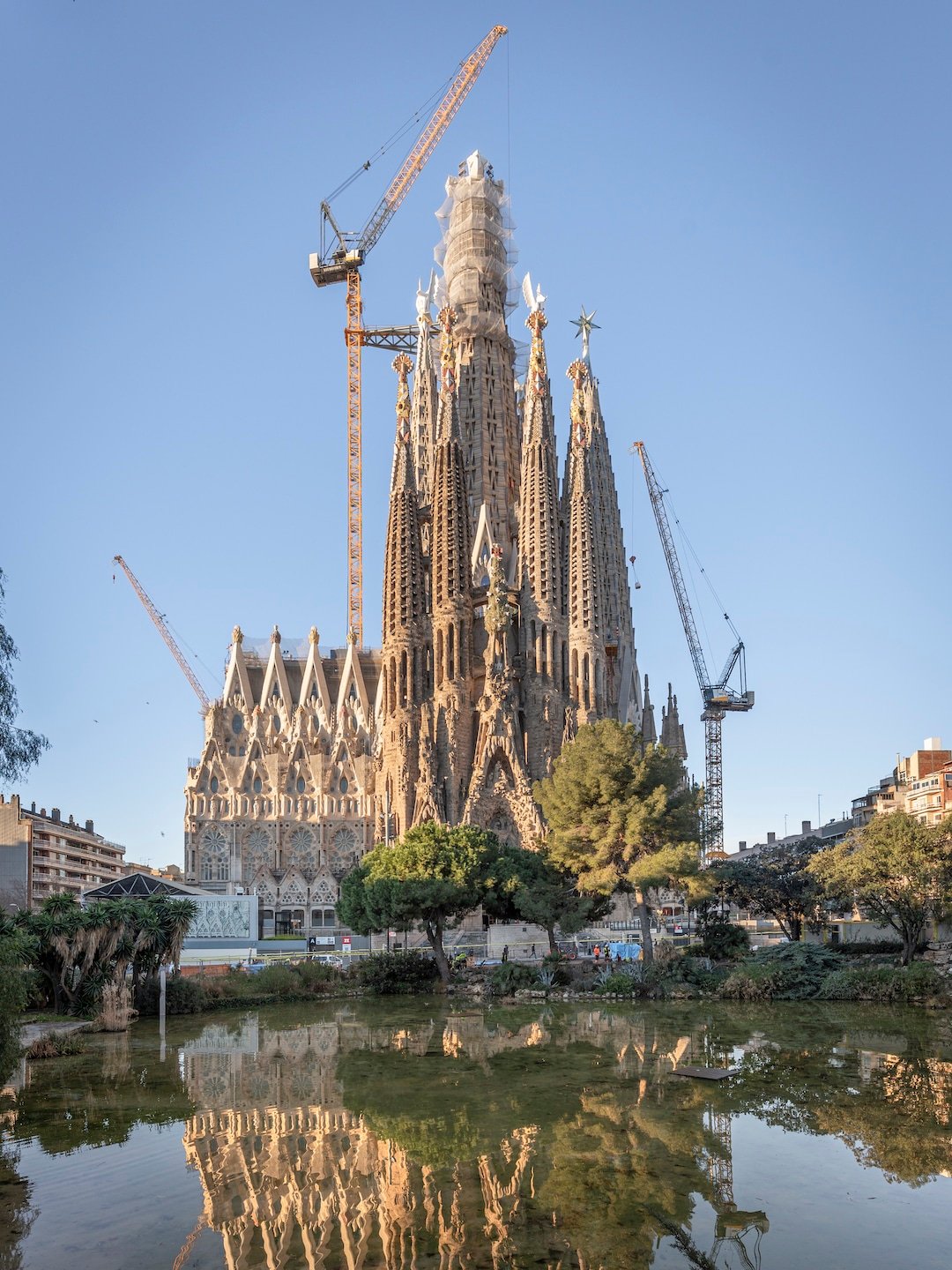
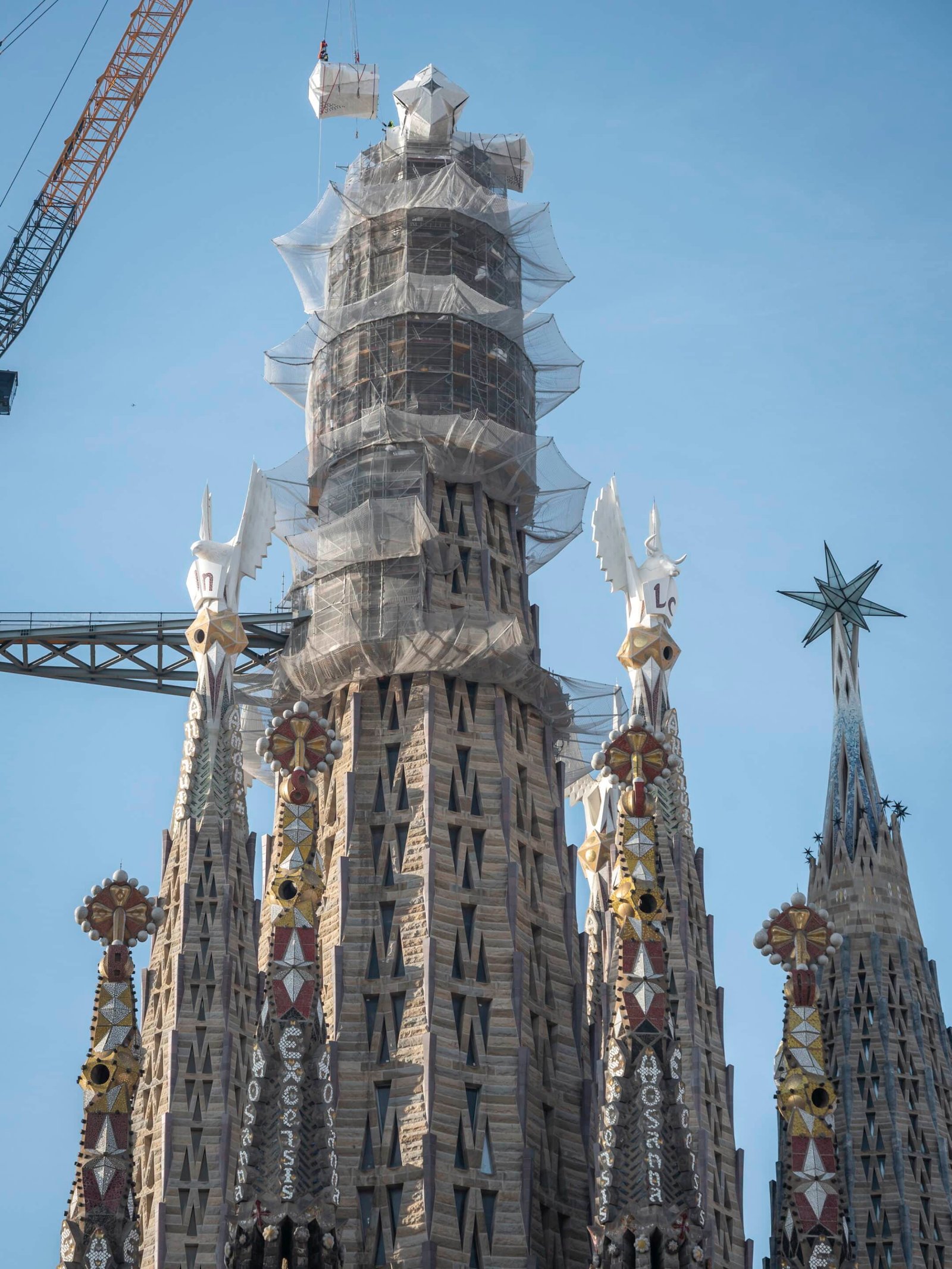
The final structural element of the cross crowning the Tower of Jesus Christ was installed at the top of the Sagrada Familia, bringing the basilica to its planned height of 172.5 meters.
With this milestone, the Sagrada Familia officially becomes the tallest church in the world, and for the first time since construction began in 1882, Antoni Gaudí’s original vertical vision for the temple has been fully realized.
For Barcelona, this is far more than a construction update. It marks the culmination of more than 140 years of architecture, engineering, craftsmanship and perseverance.
And for those of us who guide visitors through the basilica every day, it represents something even more powerful: the moment when Gaudí’s dream finally reaches the sky above Barcelona.
The Cross That Now Crowns Barcelona
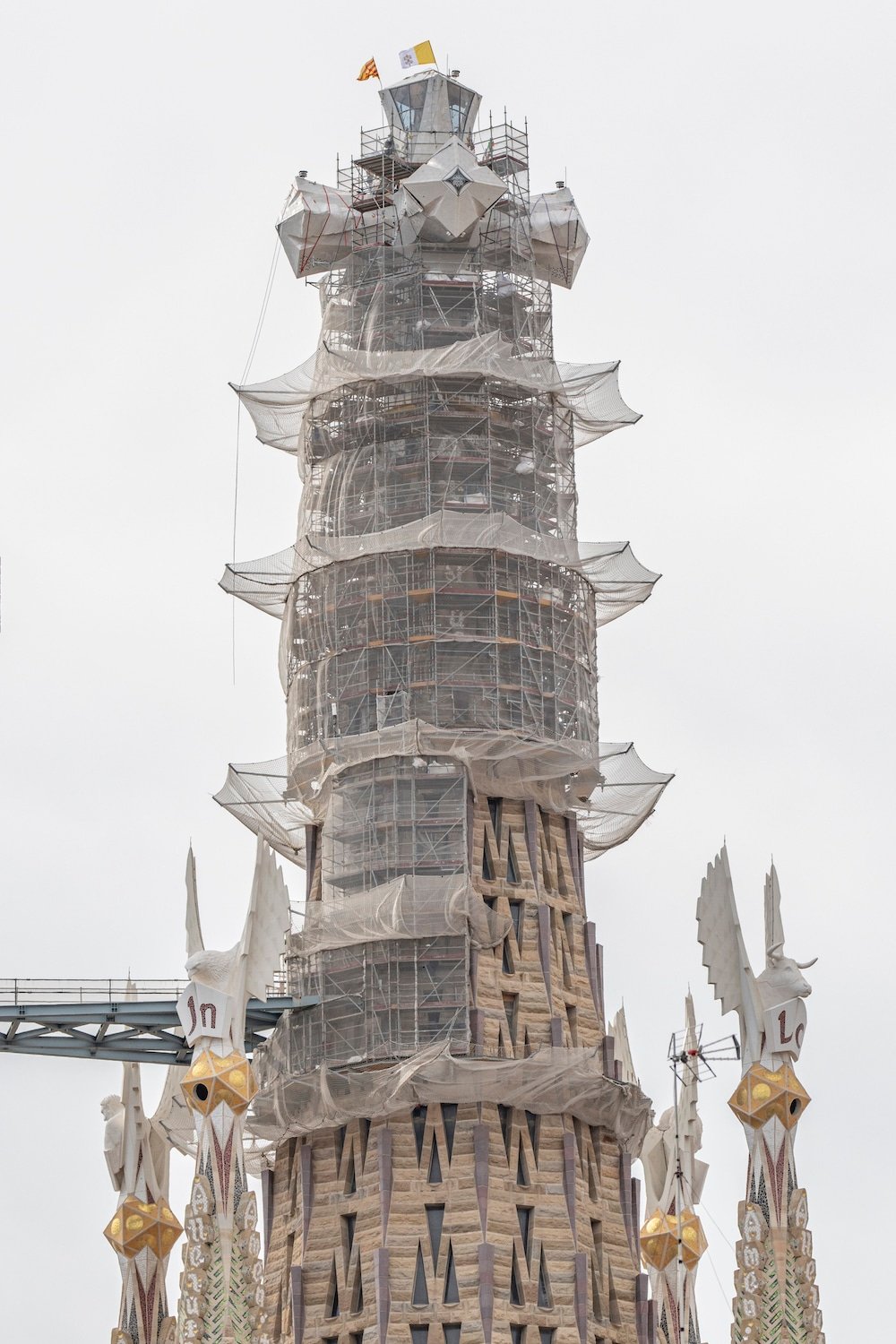
The installation of the final piece of the cross marks the symbolic completion of the Tower of Jesus Christ, the central and tallest tower of the Sagrada Familia.
Rising to 172.5 meters, the tower now defines the skyline of Barcelona exactly as Gaudí envisioned more than a century ago.
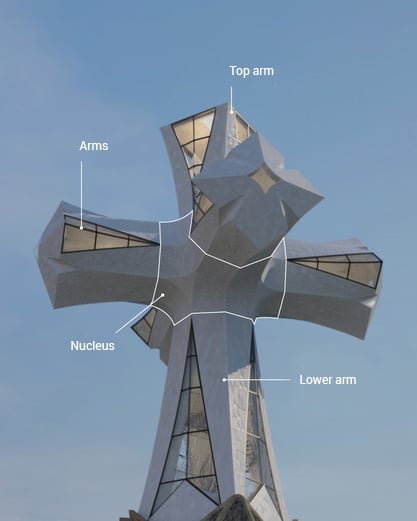
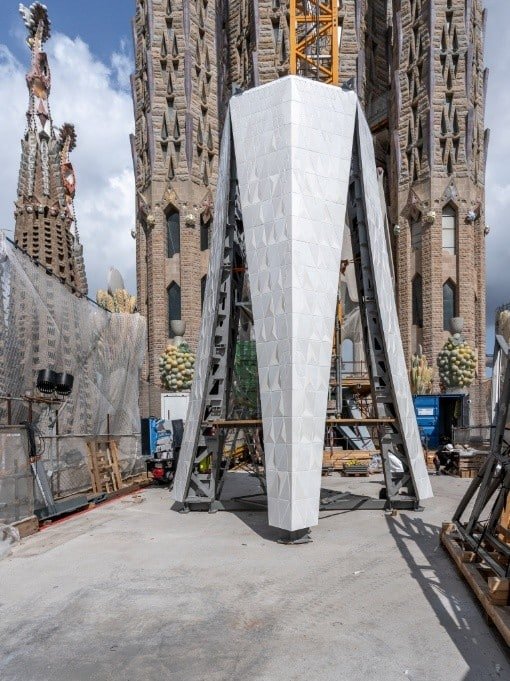
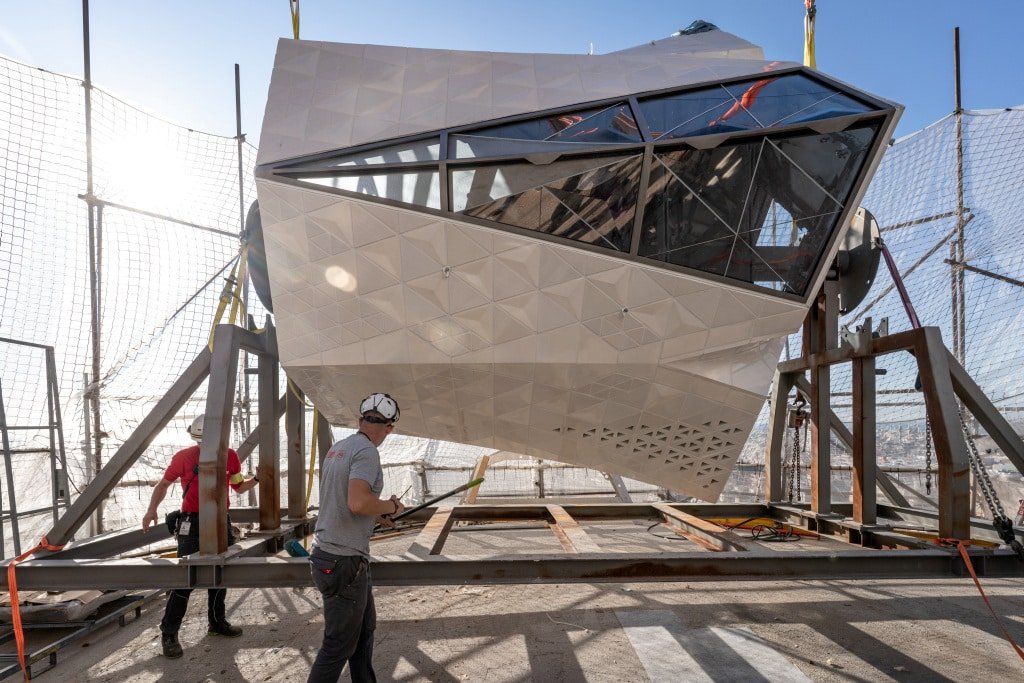
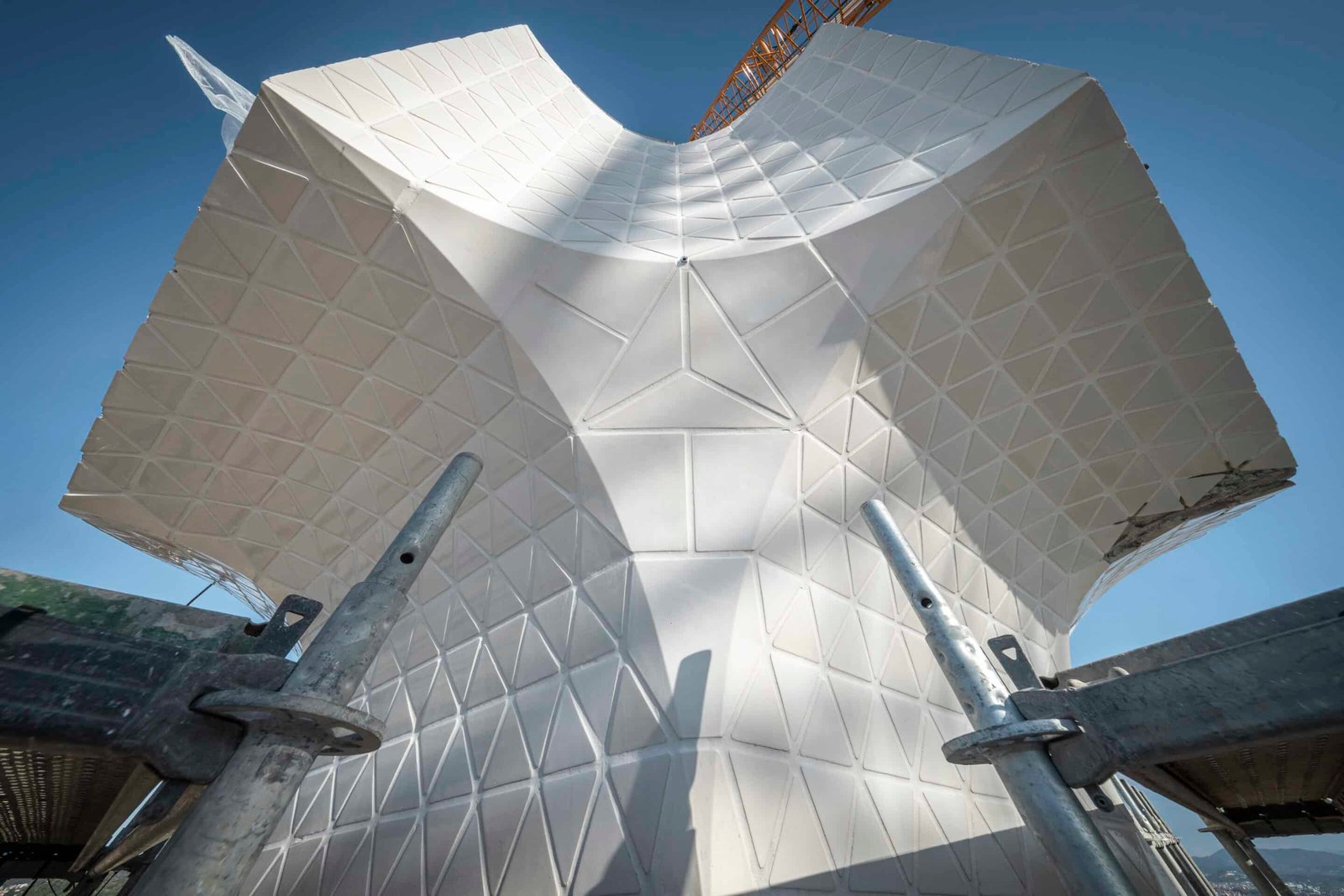
At the top sits the monumental cross that now crowns the basilica. Far from being a simple decorative element, it is designed with glass and structural components that reflect sunlight during the day and illuminate the skyline at night, making it visible from many points across the city.
Positioned at the very center of the temple, the Tower of Jesus Christ is surrounded by the four towers dedicated to the Evangelists. Together they create the architectural composition Gaudí conceived as the spiritual heart of the basilica.
For the first time in its history, the Sagrada Familia now displays the complete vertical silhouette Gaudí imagined, with the cross rising above the skyline of Barcelona.
Yet the height of the tower was never meant to dominate nature. Gaudí deliberately designed the basilica so that its highest point would remain slightly lower than Montjuïc hill, which reaches approximately 177 meters. In his view, human creations should never surpass the work of nature.
How Gaudí’s Tallest Tower Was Actually Built
Reaching 172.5 meters was not simply a matter of building higher. The construction of the Tower of Jesus Christ represents one of the most complex engineering challenges in the entire history of the Sagrada Familia.
Every stage of the process required combining traditional craftsmanship with modern engineering solutions capable of bringing Gaudí’s century-old vision to life.
Every meter of the Sagrada Familia is a technical challenge — especially when construction happens in the middle of a dense urban grid, while the basilica remains open to millions of visitors.
A Tower Designed More Than a Century Ago
Antoni Gaudí conceived the Sagrada Familia not simply as a church, but as a symbolic architectural landscape rising toward the sky.
At the heart of this vision stands the Tower of Jesus Christ, the central and tallest tower of the entire basilica. But Gaudí designed it as part of a much larger composition: the Sagrada Familia will ultimately include 18 towers, each representing key figures of the Christian tradition.
The lowest towers are the twelve towers of the Apostles, located above the three main façades of the Sagrada Família. These towers frame the exterior of the temple and form the base of the vertical hierarchy Gaudí imagined.
Above them rises the Tower of the Virgin Mary, located above the apse of the basilica. Completed in 2021 and crowned with a luminous twelve-pointed star, this tower reaches 138 meters and occupies a special place in the symbolic structure of the temple.
Closer to the center of the basilica stand the four towers of the Evangelists, which surround the central crossing. Each of these towers is dedicated to one of the authors of the Gospels — Saint Matthew, Saint Mark, Saint Luke and Saint John — and is crowned with their traditional symbolic figures: the angel, the lion, the bull and the eagle.
At the very center rises the Tower of Jesus Christ, which now reaches 172.5 meters after the installation of the cross in February 2026.
Together, these 18 towers form a carefully structured vertical composition where each level reflects a spiritual hierarchy — from the Apostles at the base, to the Virgin Mary, the Evangelists, and finally Christ rising above them all.
This idea of a spiritual mountain built in stone was one of Gaudí’s most powerful architectural concepts, and it is only now, more than a century later, that the skyline of Barcelona is beginning to reveal the full scale of that vision.
| NUMBER | TOWERS | SYMBOLISM | HEIGHT | LOCATION IN THE BASILICA |
| 12 | Apostles | Represent the twelve apostles | 90–112 m | Located above the three main façades (Nativity, Passion and Glory) |
| 1 | Virgin Mary | Dedicated to the Virgin Mary | 138 m | Above the apse, behind the nave |
| 4 | Evangelists | Matthew, Mark, Luke and John, authors of the Gospels | 135 m | Surround the central crossing of the basilica |
| 1 | Jesus Christ | Represents Christ, the central figure of Christianity | 172.5 m | The central tower rising above the crossing |
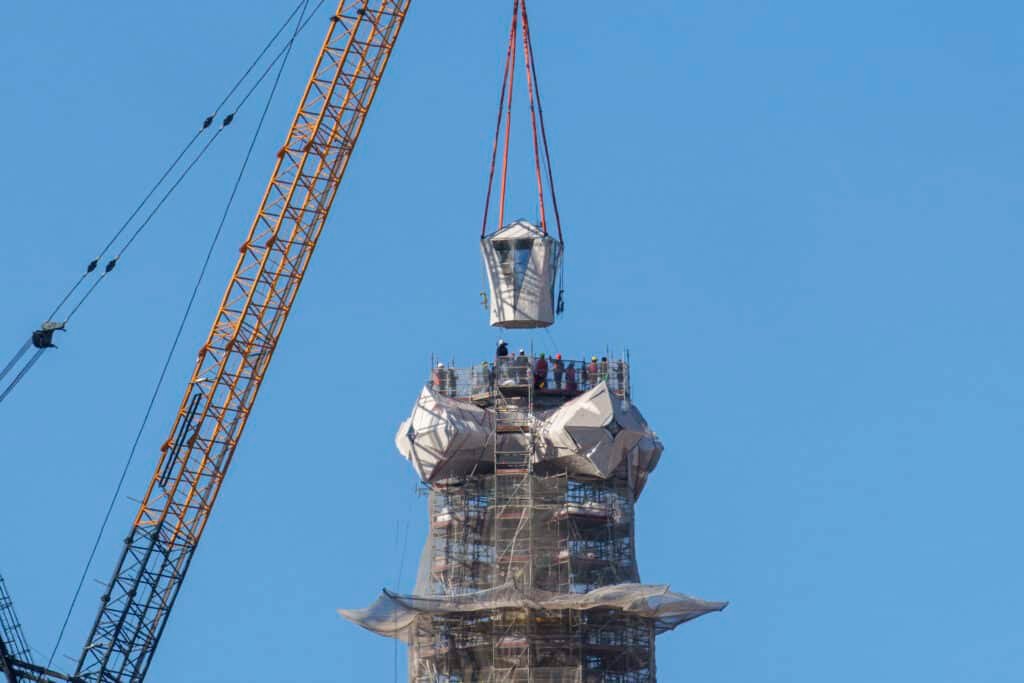
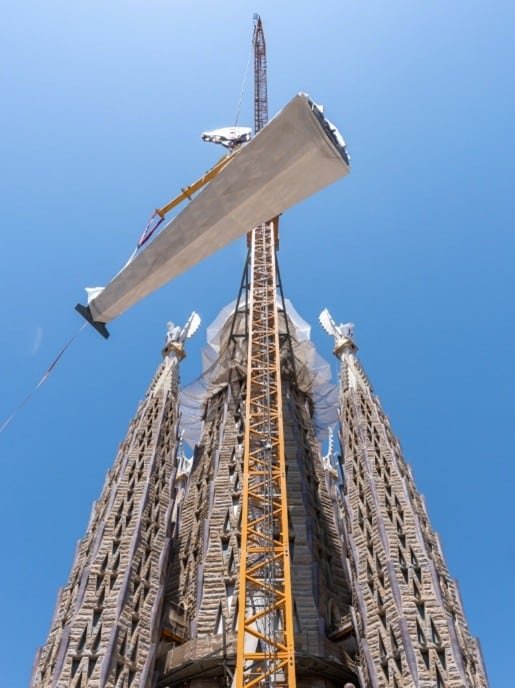
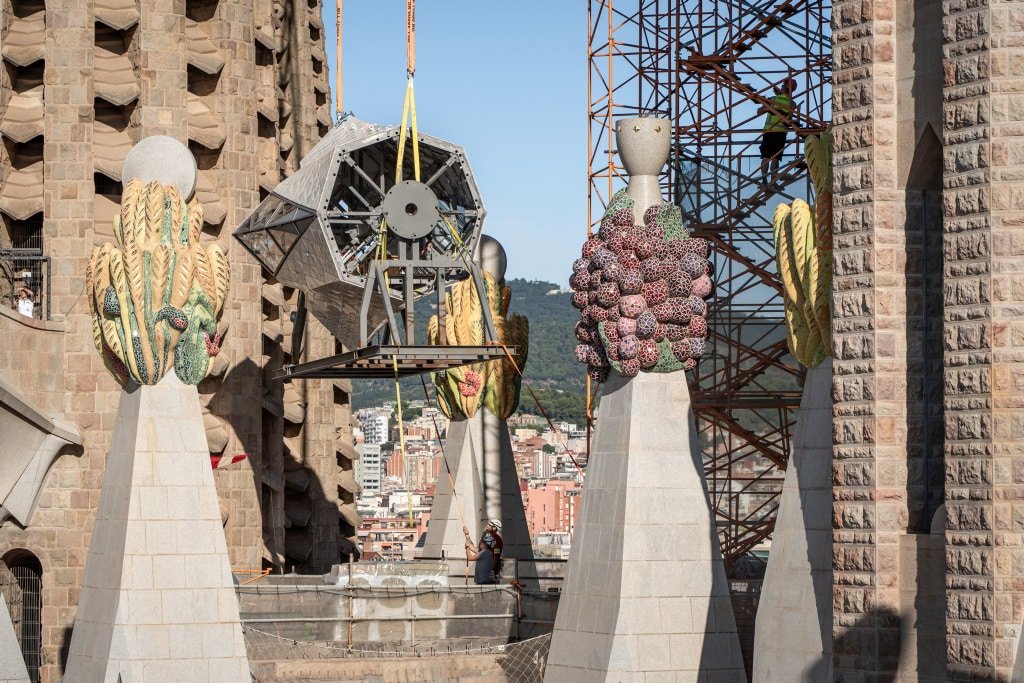
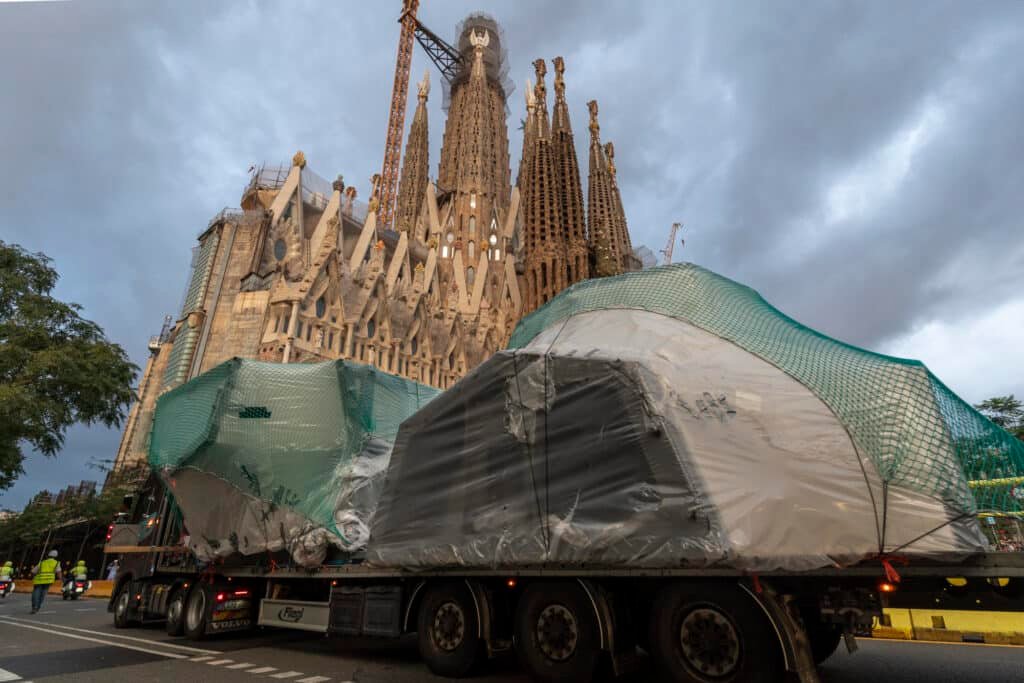
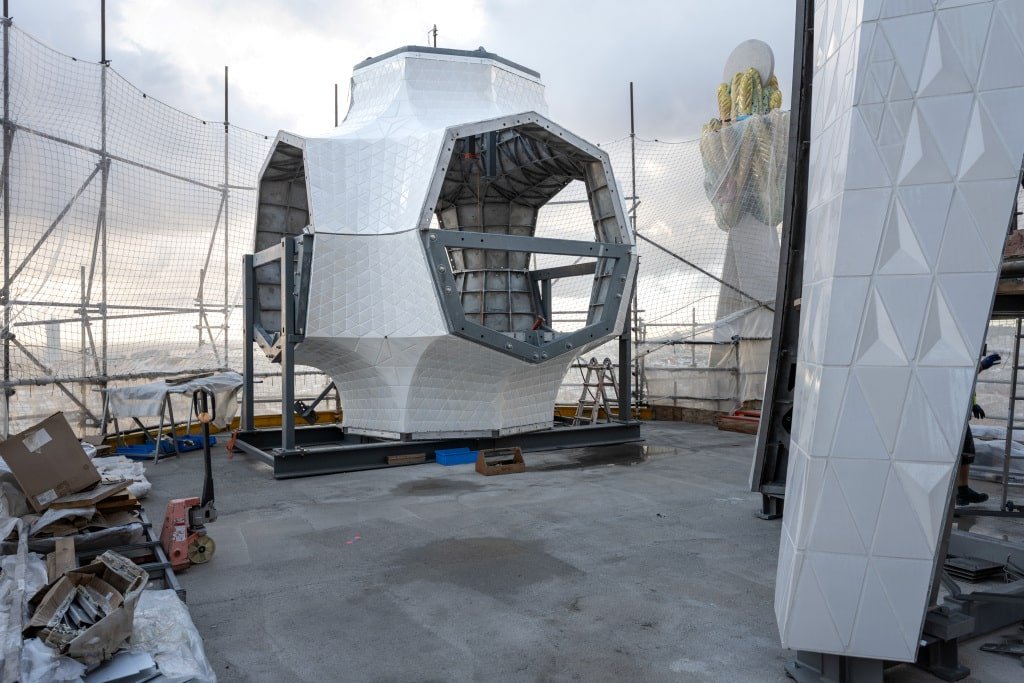
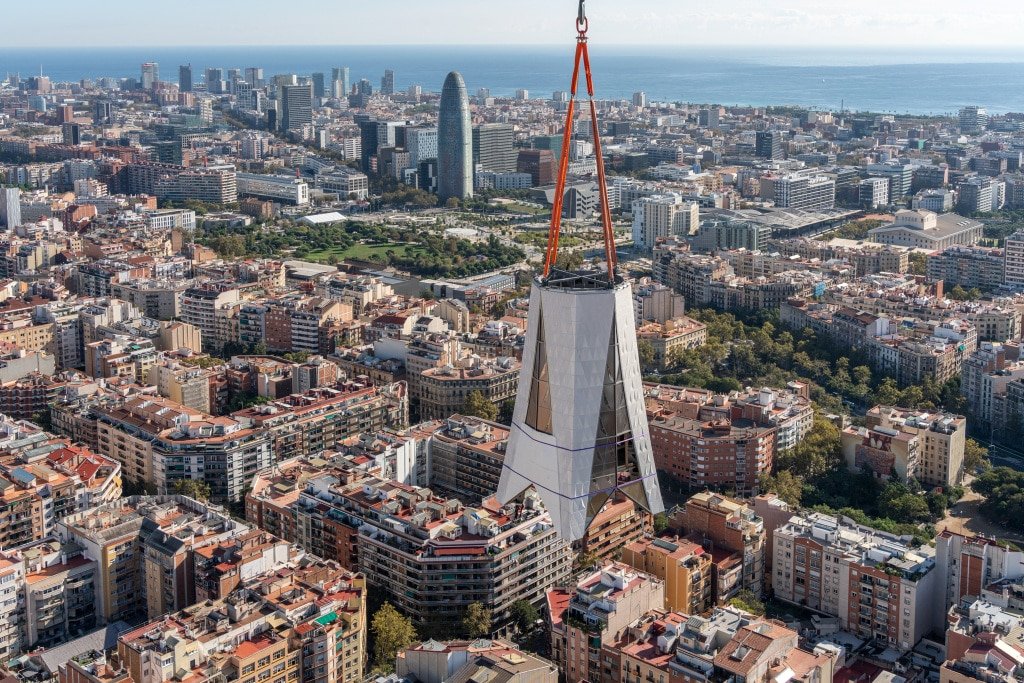
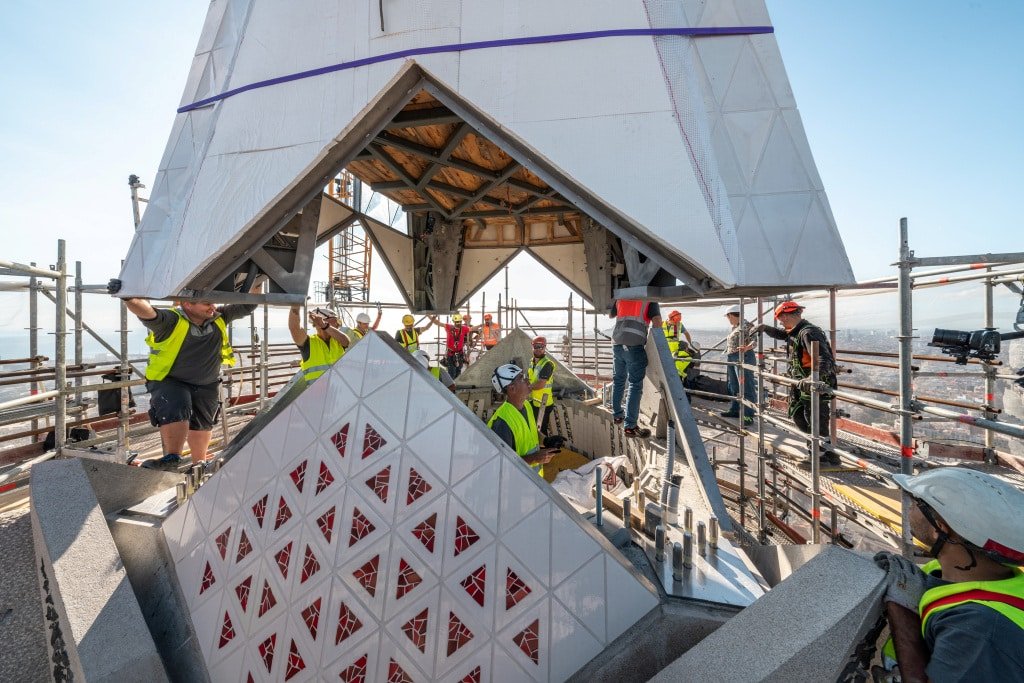
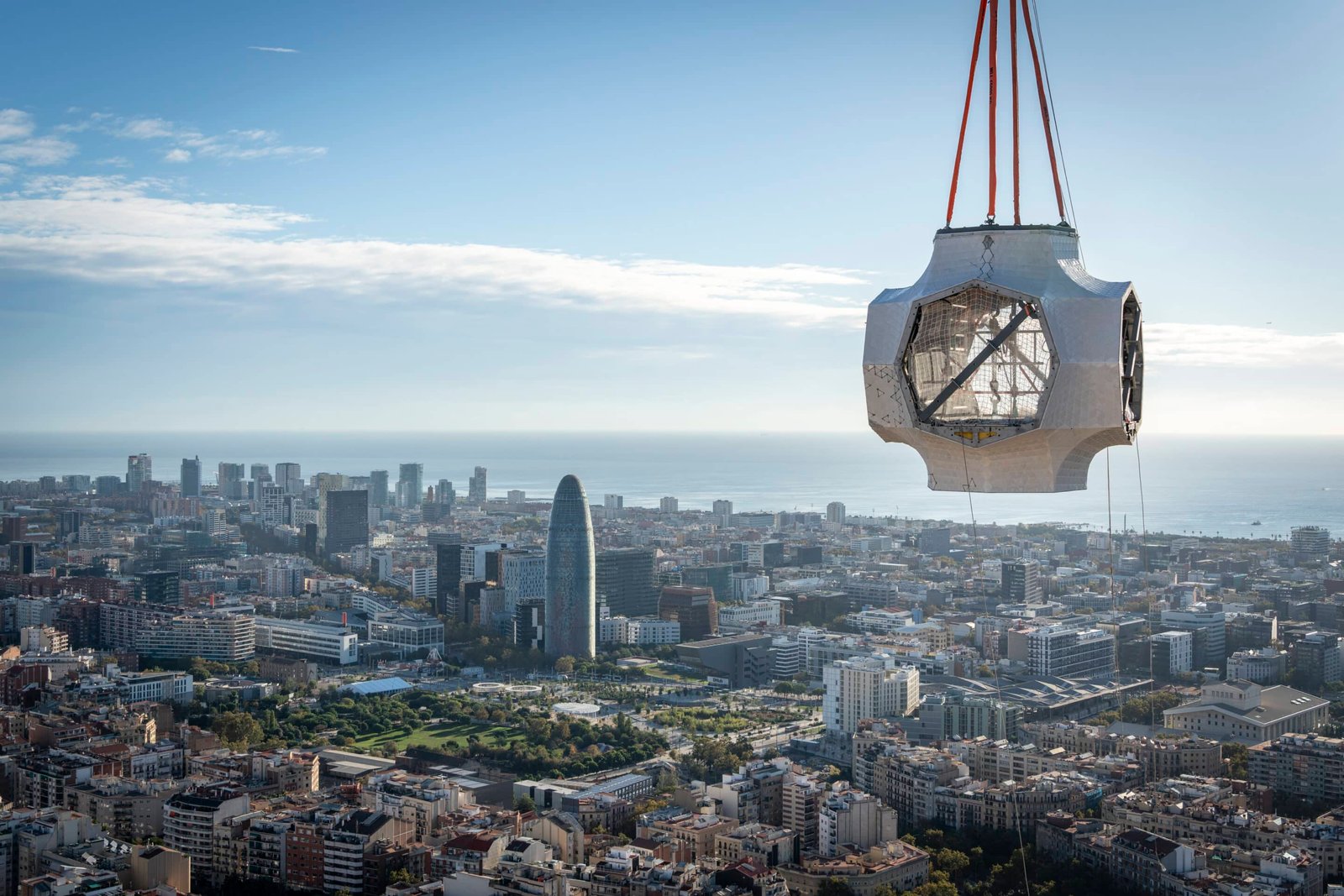
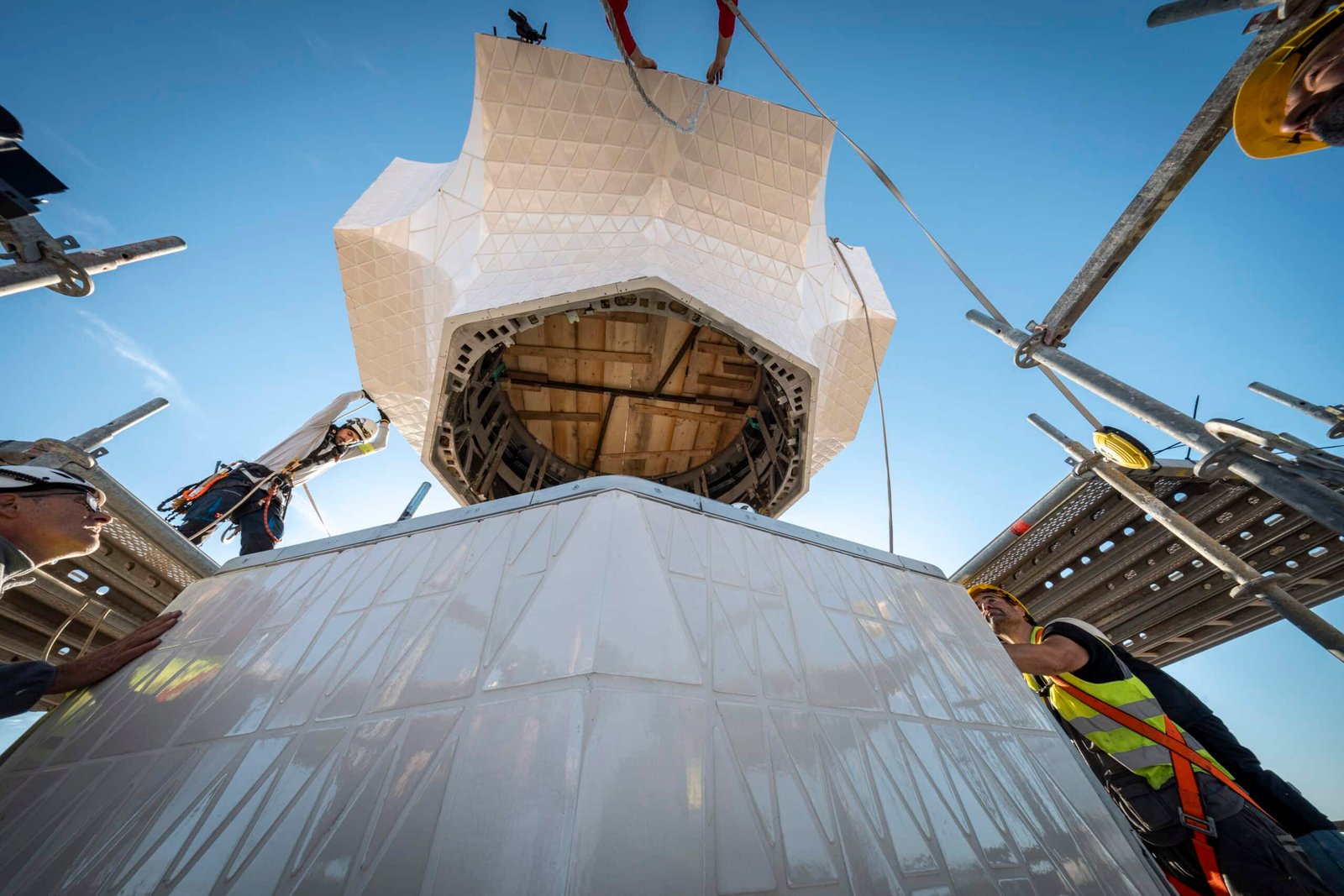
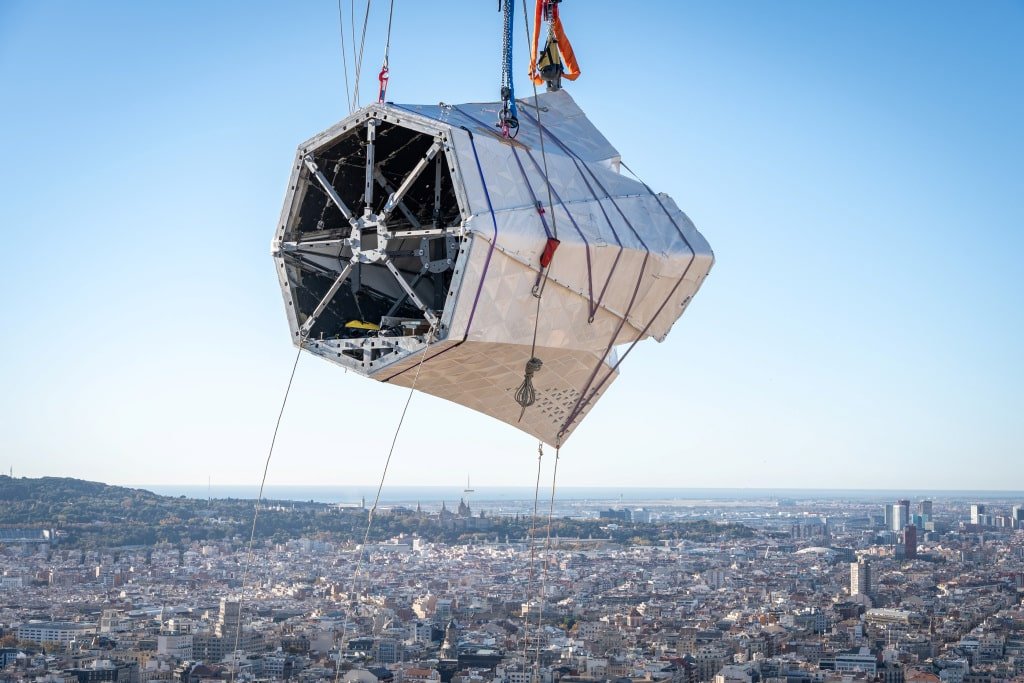
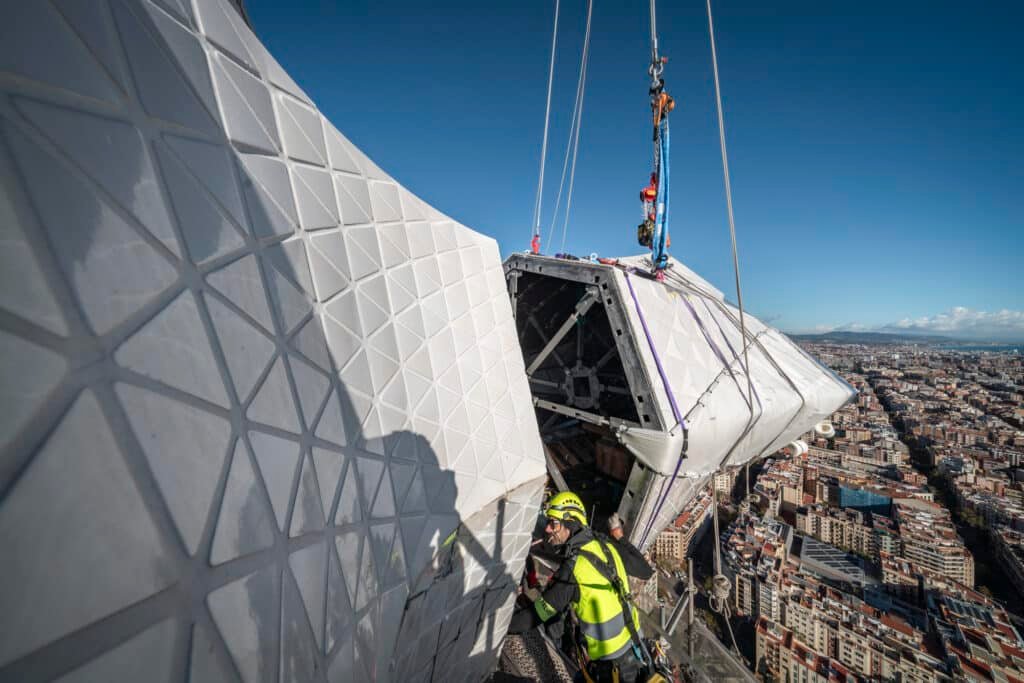
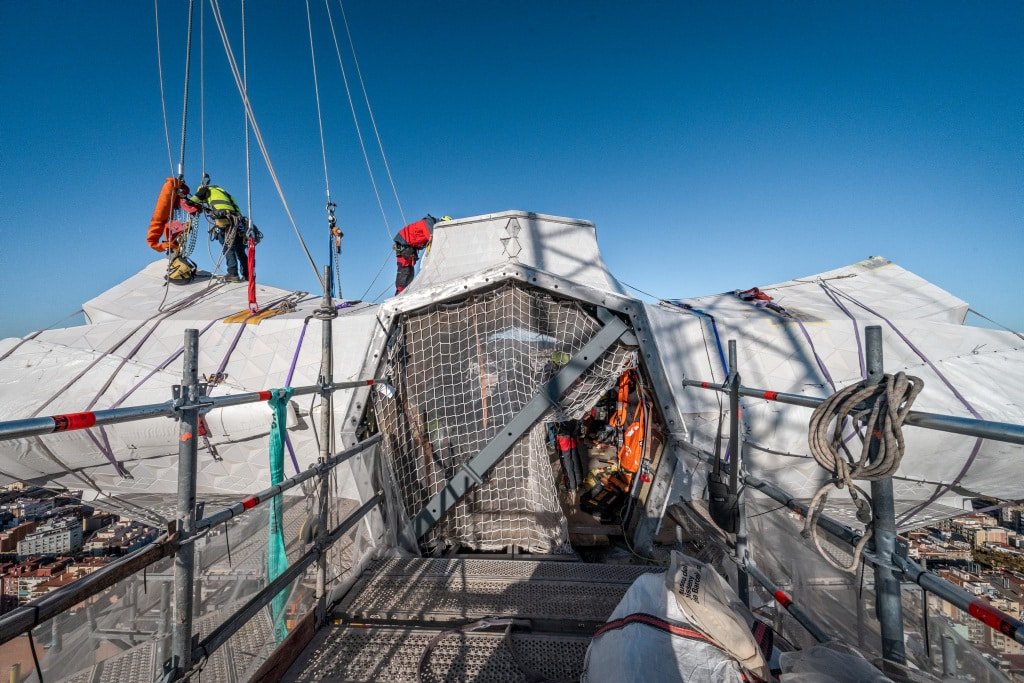
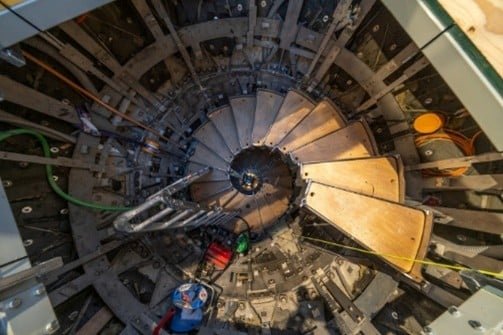
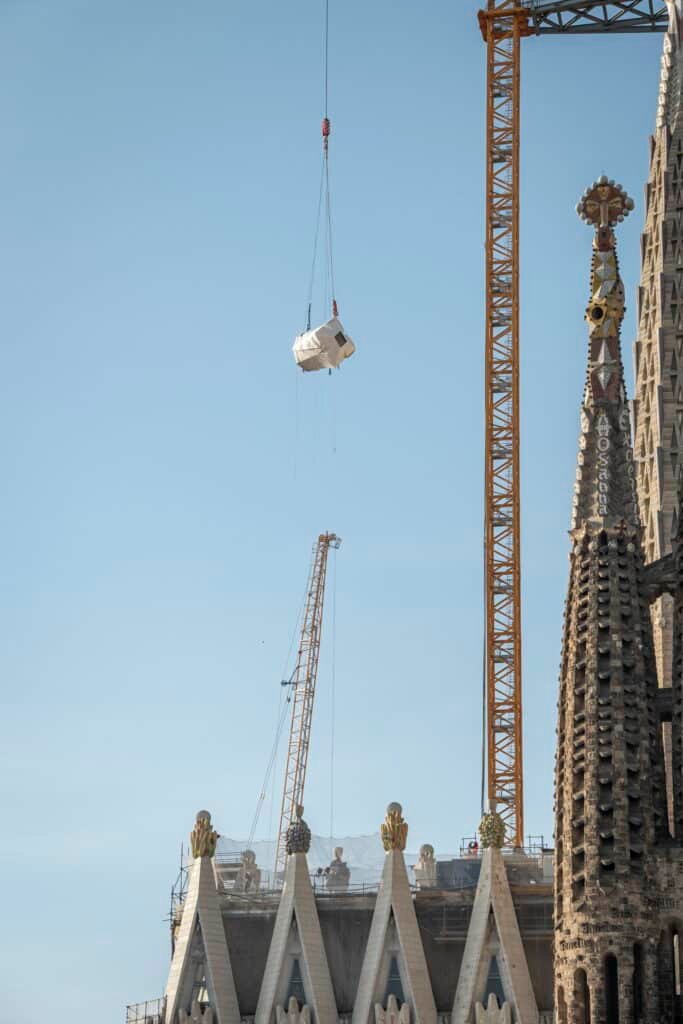
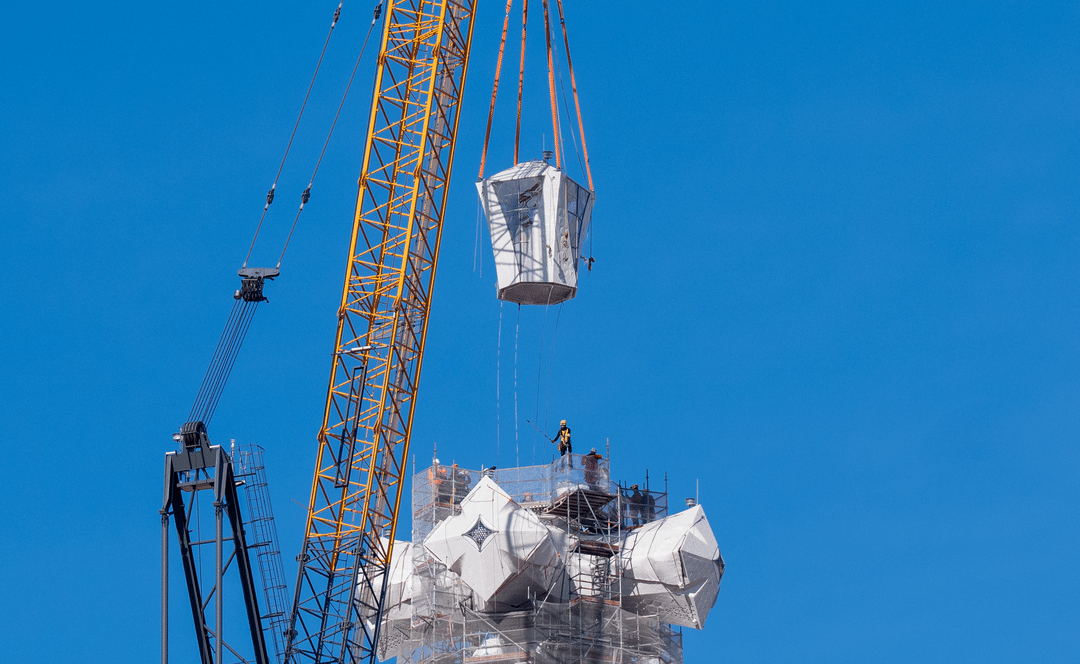
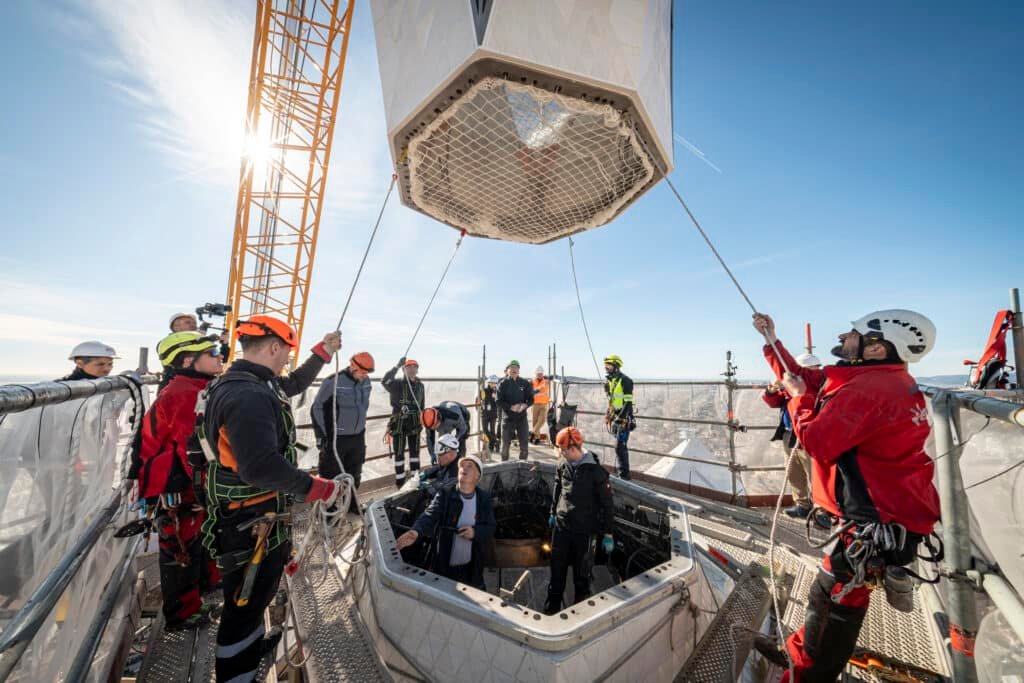
The following images from the official Sagrada Familia construction blog illustrate the complex process behind the installation of the monumental cross that crowns the Tower of Jesus Christ.
Building the Tower in Phases
The construction of the tower followed a sequence of carefully planned stages developed by the Sagrada Familia technical team.
First, the central structural core was built, forming the internal support system that would carry the immense vertical load of the tower.
Next came the progressive stone levels, assembled using prefabricated pieces designed with extremely precise geometries so they could fit together perfectly once lifted into position.
As the tower approached its final height, the construction focused on the upper crown, the complex architectural structure that supports the monumental cross.
Finally, the installation of the cross completed the vertical composition that defines the skyline of the basilica today.
Each stage required extraordinary precision, with large stone elements being lifted and assembled hundreds of meters above ground.
Engineering and Logistics at 170 Meters
Working at such extreme heights required solutions rarely used in traditional stone construction.
Many of the architectural elements of the tower weigh several tons and had to be raised using specialized cranes and custom lifting systems designed specifically for the project.
At more than 170 meters above the city, wind conditions become a major factor. Engineers had to calculate how each piece would behave structurally once installed and ensure the tower could withstand the forces acting on it at that altitude.
To achieve this, the project combines digital modelling, advanced fabrication techniques and traditional stone craftsmanship.
This hybrid approach allows the team to reproduce Gaudí’s original geometry with extraordinary accuracy while meeting the structural and safety standards required for modern construction.
The Exterior Is Complete — But Work Continues Inside
Although the cross now crowns the tower and defines the skyline of Barcelona, the work is not entirely finished. The exterior structure of the cross has been completed, but the interior still requires technical installations and final adjustments.
For now, visitors cannot access this part of the tower. Like many elements of the Sagrada Familia, construction continues step by step as craftsmen and engineers finalize the remaining details. This ongoing process is part of what makes the basilica unique: even after more than 140 years, the Sagrada Familia remains a living architectural project.
What This Means for Visitors in 2026 (Year of Gaudí)
The completion of the Tower of Jesus Christ arrives at a particularly meaningful moment for Barcelona.
In 2026, the city will commemorate the centenary of Antoni Gaudí’s death, a year that will bring international attention to his architectural legacy and to the Sagrada Familia itself.
For visitors, this milestone means experiencing the basilica with a skyline that has never existed before in its history. For the first time, the temple stands with the complete vertical composition Gaudí imagined — a forest of towers rising toward the sky with the cross of Christ at its highest point.
Many special events and cultural initiatives will take place throughout the city during the Year of Gaudí 2026.
Visiting Barcelona in 2026?
The centenary of Gaudí’s death is shaping up to be one of the most important cultural moments in decades.
To help you navigate it properly, we’ve broken down the official Year of Gaudí 2026 program — including the full downloadable PDF with all confirmed events.
If you’re planning ahead, this is essential reading.
Why This Moment Confirms Gaudí’s Genius
Few architects in history have left behind a vision so powerful that it could guide construction more than a century after their death.
Yet this is precisely what has happened with the Sagrada Familia.
Gaudí conceived the basilica as an architectural organism inspired by nature, where every column, tower and façade had both symbolic meaning and structural purpose.
The completion of the Tower of Jesus Christ demonstrates just how advanced his thinking was. Long before digital modelling or modern engineering tools existed, he developed geometric solutions capable of supporting a structure rising more than 170 meters above the ground.
Today, architects, engineers and craftsmen continue to interpret and apply those principles as the basilica gradually approaches its final form.
More than 140 years after construction began, Gaudí’s vision continues to shape one of the most extraordinary architectural projects ever built.
FAQs – Frequently Asked Questions — Barcelona 2026
Why is 172.5 meters spiritually significant?
Gaudí deliberately designed the basilica to remain slightly lower than Montjuïc hill, which reaches about 177 meters. For him, architecture should respect the natural landscape rather than dominate it.
How do engineers stabilize a 170+ meter stone structure?
Modern structural simulations calculate wind loads, lateral forces, and stress distribution. Reinforced internal cores and carefully distributed weight ensure long-term stability.
Was the cross assembled in the air?
Large components were prefabricated and then lifted using high-capacity cranes, with precision placement at extreme height. Final assembly required millimetric adjustments.
Can visitors access the Tower of Jesus Christ?
At the moment, visitors cannot access this tower. The interior of the cross and several technical installations are still being completed.
Will the Sagrada Família be completed in 2026?
Construction continues, particularly on the Glory Façade. While timelines evolve, the structural culmination of the central tower marks one of the most decisive milestones in its history.
Why is 2026 such an important year for Barcelona?
Because it combines the centenary of Antoni Gaudí’s death with Barcelona’s designation as World Capital of Architecture, placing architecture at the centre of the city’s cultural life.
Is 2026 a good year to visit Barcelona if I’m interested in Gaudí?
Absolutely. 2026 offers an unparalleled opportunity to experience Gaudí’s work with added historical, cultural and institutional context — something that happens only once in a lifetime.
FROM VISION TO REALITY:
Watch the Cross of the Tower of Jesus Rise Above Barcelona
To help you experience the process more vividly, we have curated a series of videos from the official Sagrada Familia YouTube channel that document the key stages of the construction. Watching these moments unfold in motion reveals the extraordinary scale of the operation: massive architectural elements lifted hundreds of metres into the sky, teams of engineers and workers coordinating every movement with remarkable precision, and Gaudí’s vision slowly taking shape above the skyline of Barcelona.
It’s difficult not to feel the emotion of these moments. Each lift, each installation, each carefully guided piece represents more than engineering — it is the continuation of a project that began more than a century ago.
We hope you enjoy watching this extraordinary moment — the culmination of Gaudí’s vision rising above Barcelona.
Few moments in Barcelona’s history are as powerful as watching Gaudí’s vision finally reach the sky.
* Barcelona 2026
The Sagrada Familia is now the tallest church in the world. But more importantly, it is closer than ever to the vision Antoni Gaudí imagined. In 2026, that vision is no longer theoretical. It touches the sky.
Understanding the complexity behind this construction becomes even more fascinating when explored during a private Sagrada Familia tour with an expert guide who explains the engineering and symbolism in depth.
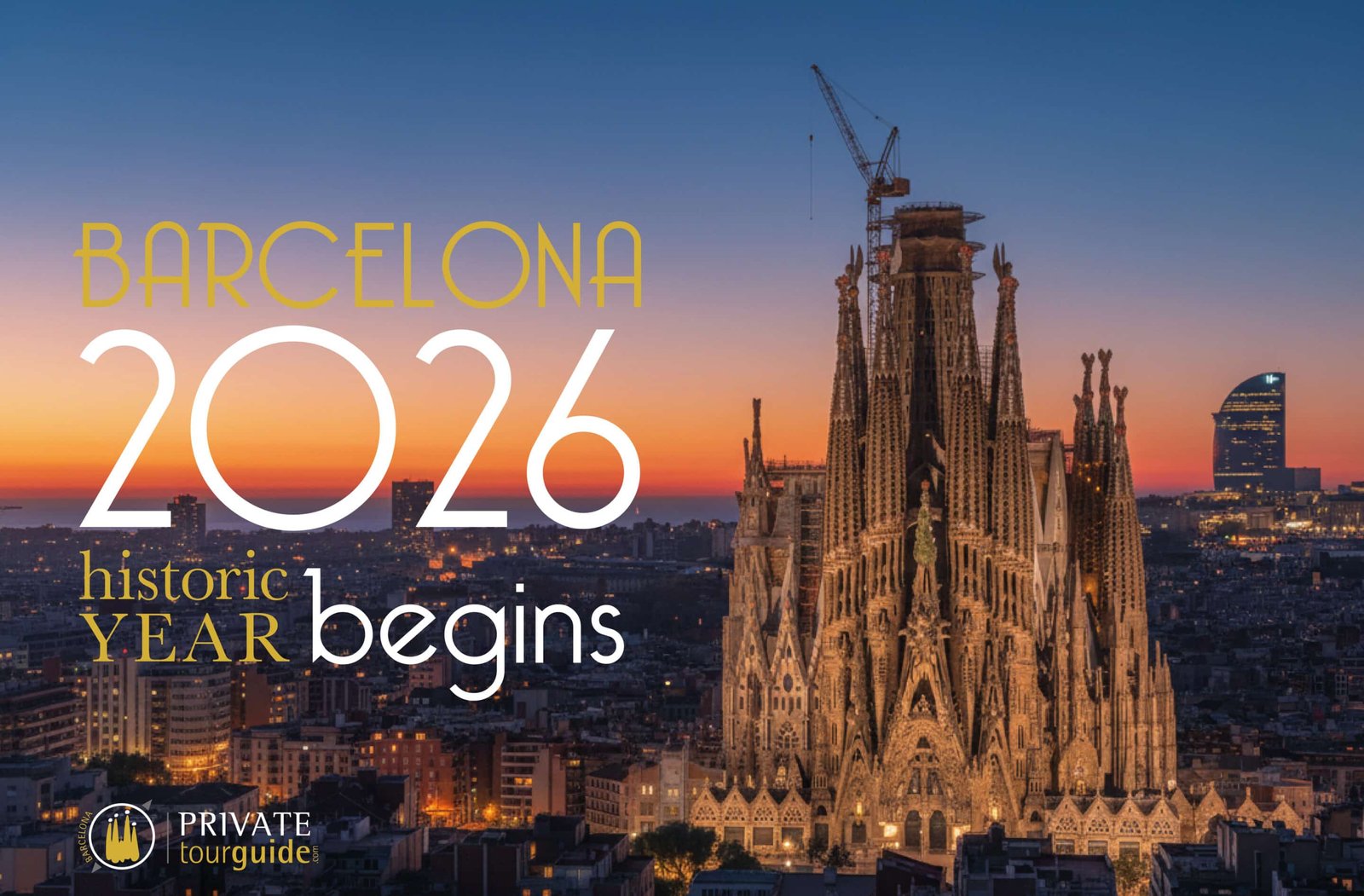
Barcelona 2026: more than a milestone
The completion of the Tower of Jesus Christ marks one of the most symbolic moments of Gaudí Year 2026.
But the year holds much more.
Alongside the centenary of Antoni Gaudí’s death, Barcelona will also become World Capital of Architecture 2026, placing the city at the centre of the global architectural conversation.
>> Discover what makes Barcelona 2026 such an extraordinary year