


The Sagrada Família is entering a new chapter in its construction. With the exterior of the Tower of Jesus Christ completed in 2026, attention is turning towards the remaining elements of Antoni Gaudí’s extraordinary architectural vision.
Among them, the Glory Façade stands out as one of the most ambitious and complex parts of the project.
Planned as the basilica’s main entrance, this monumental façade will complete the architectural composition of the temple. Yet its story goes beyond towers, sculptures and religious symbolism. Gaudí’s original design also included a grand staircase facing Carrer de Mallorca, bringing the project into contact with the surrounding urban environment.
Here is what the Sagrada Família’s official documentation tells us about the Glory Façade, its architectural significance and the current progress of construction.
What Is the Glory Façade of the Sagrada Família?
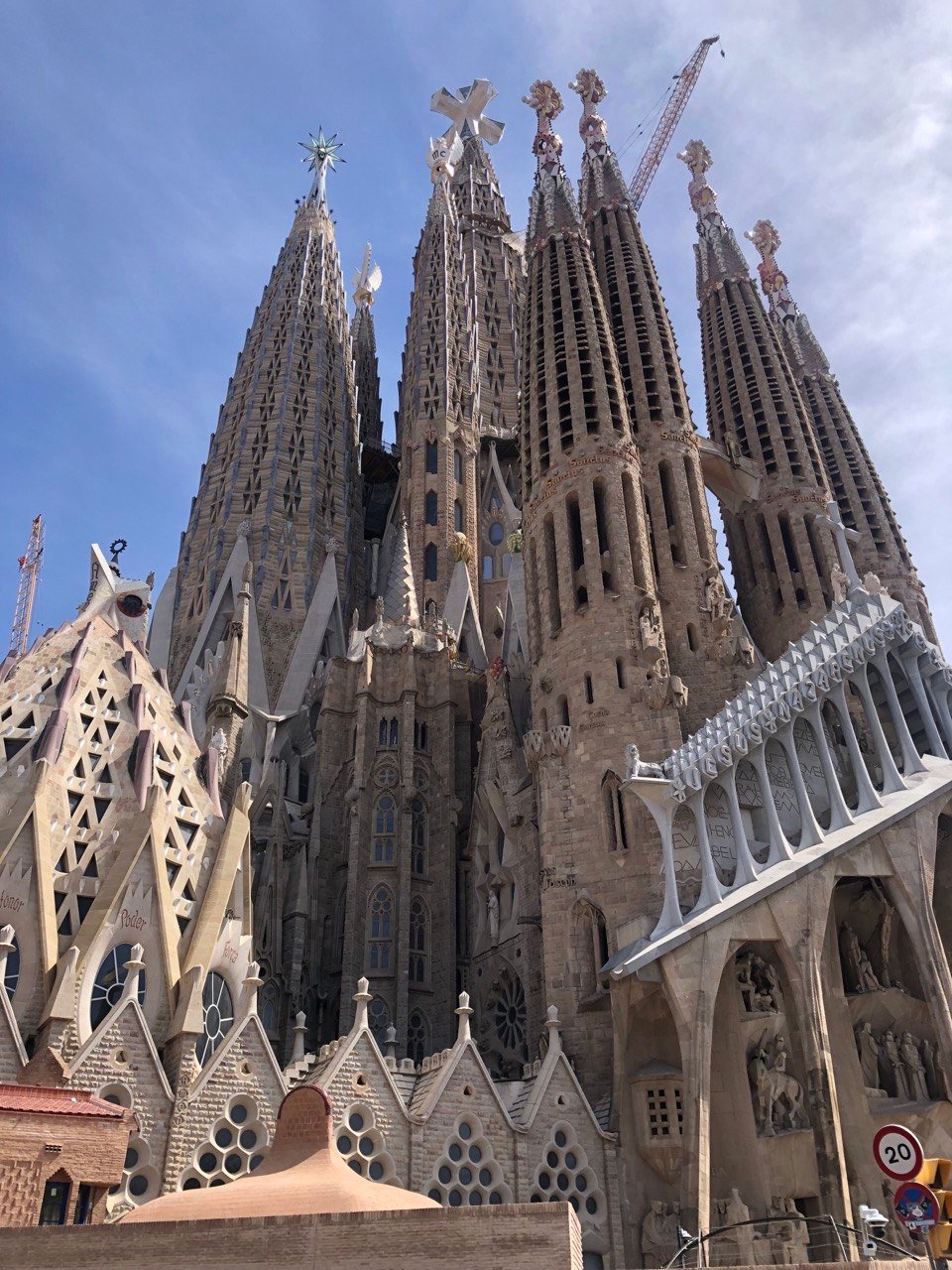
The Glory Façade is the principal entrance to the Sagrada Família, located on Carrer de Mallorca and facing the sea. Gaudí conceived the basilica around three monumental façades, each expressing a different stage of Christian belief.
The Nativity Façade celebrates the birth of Jesus. The Passion Façade represents his suffering and death. The Glory Façade focuses on his glory and the path towards eternal life.
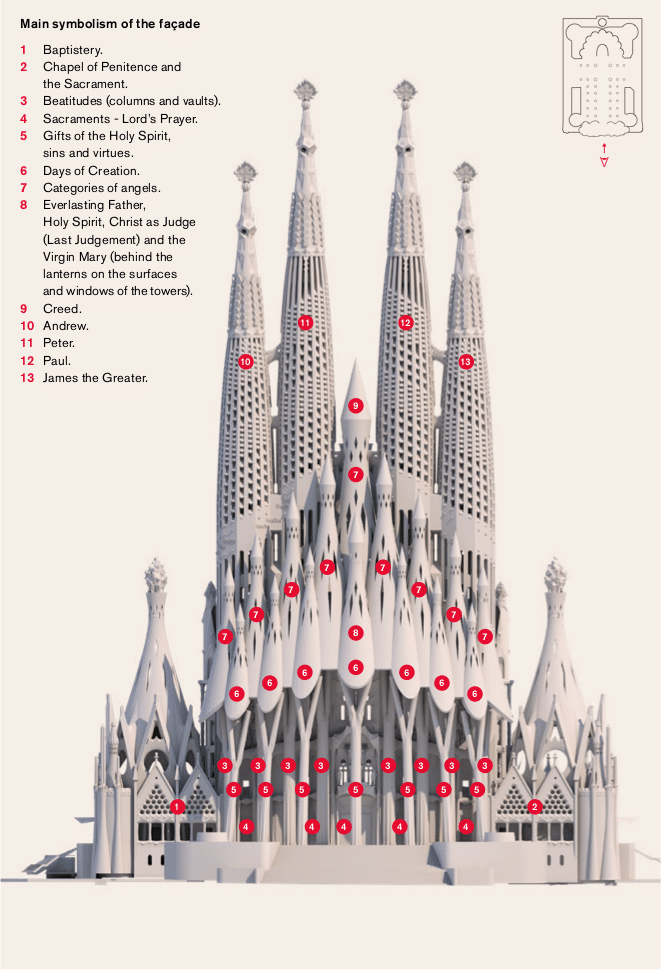
According to the Sagrada Família’s official documentation, the Glory Façade will depict the history of humanity, from Adam and Eve to the Last Judgement, alongside the teachings of Jesus.
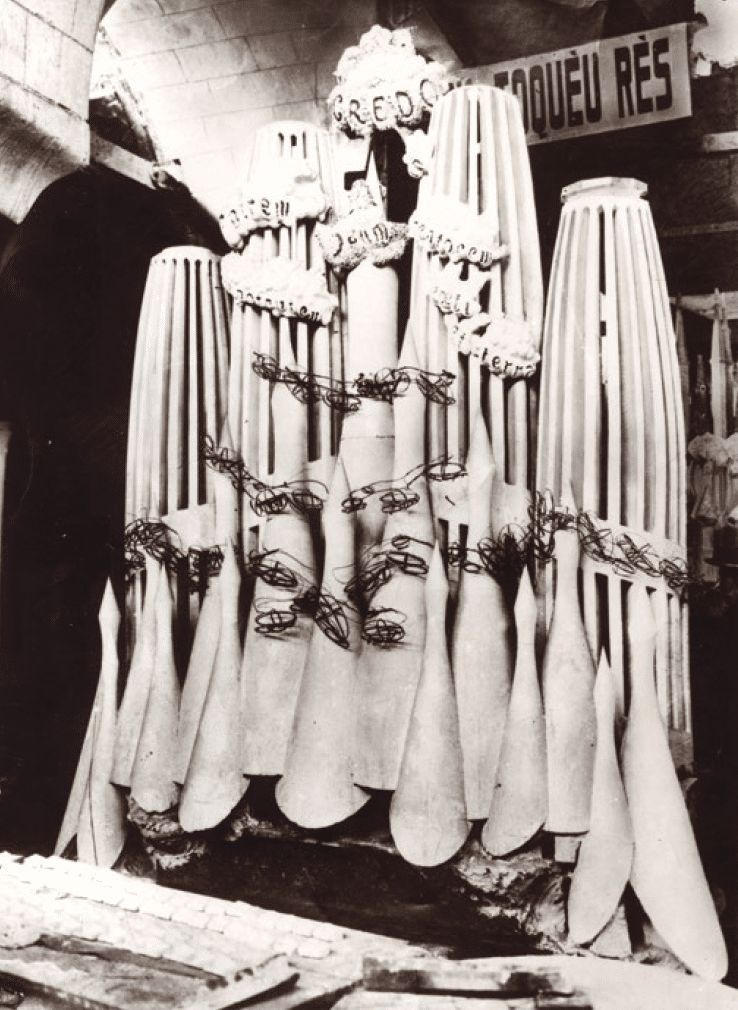
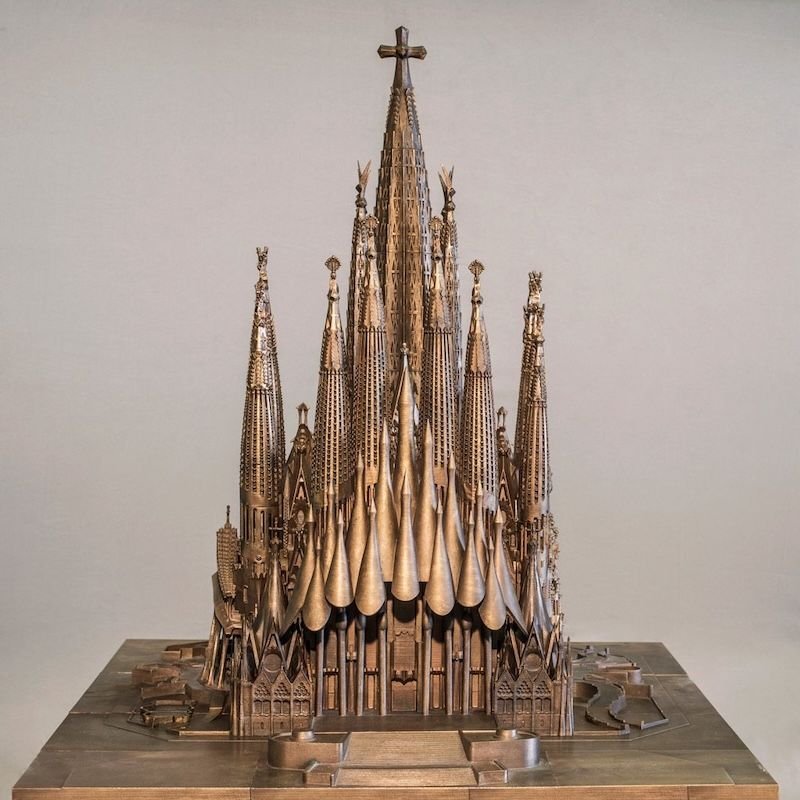
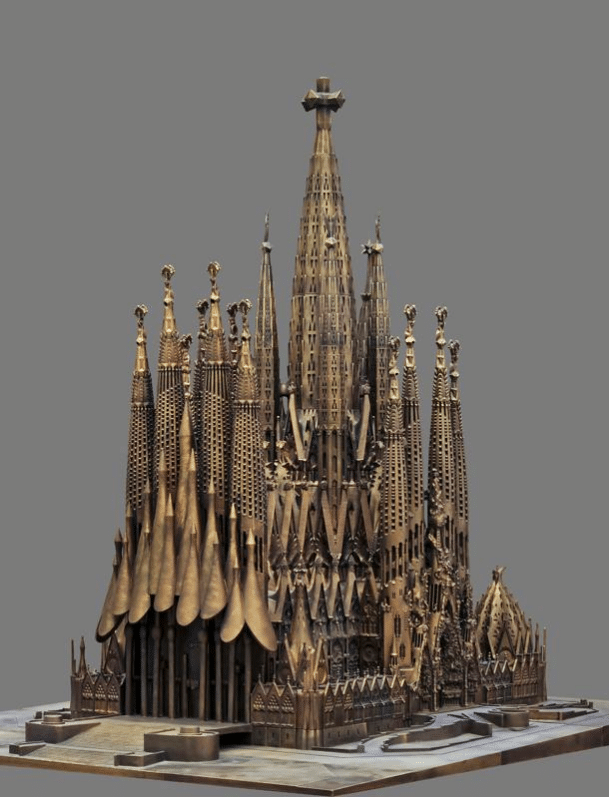
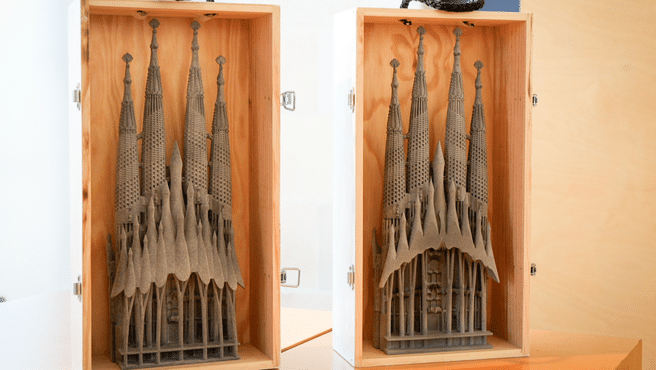
It will feature four bell towers dedicated to the apostles Andrew, Peter, Paul and James the Greater, together with a monumental entrance portico known as the narthex.
The façade is therefore much more than an architectural statement. It forms part of the religious narrative that Gaudí intended visitors to experience as they approach and enter the basilica.
The Monumental Staircase: An Essential Part of Gaudí’s Design
One of the most distinctive elements of the original project is the grand staircase planned for the Glory Façade.
According to the Sagrada Família’s official information, Gaudí designed a staircase to bridge the approximately four-metre difference in elevation between Carrer de Provença and Carrer de Mallorca and connect the temple’s interior level with the main entrance.
His design also envisages an elevated structure over Carrer de Mallorca, allowing traffic to pass underneath.
This arrangement illustrates the scale of Gaudí’s ambition. The entrance was conceived not simply as a doorway, but as a monumental architectural approach integrated into the overall composition of the basilica.
The original design also gives the staircase a symbolic role within the façade’s religious programme, which encompasses the ideas of glory, purgatory and hell.
Today, the relationship between this architectural vision and the existing city is an important part of the wider conversation surrounding the completion of the temple.
What Is Happening with the Glory Façade in 2026?
On 22 September 2026, the Sagrada Família published an official update on the final phase of construction.
Following the completion and blessing of the exterior of the Tower of Jesus Christ on 10 June 2026, the basilica confirmed that work was concentrating on the interior finishes of that tower, with an elevator to be installed subsequently.
Construction activity is also focused on the Glory Façade.
Earlier, on 24 July 2026, the basilica announced a new phase for its central crane. After playing a key role in completing the exterior of the Tower of Jesus Christ, the crane was being lowered and would be used primarily to construct the four towers of the Glory Façade.
These towers are planned to reach a height of 120 metres.
The announcement marks an important stage in the construction of the façade. However, the towers are only one component of the larger architectural project, which also includes the monumental portico, its symbolic elements and the staircase described in Gaudí’s original design.
Why Is the Glory Façade Such a Complex Project?
The complexity of the Glory Façade lies in the number of architectural and symbolic elements that must come together to complete Gaudí’s vision.
The official project documentation describes a monumental portico crowned by sixteen large lanterns arranged on two levels. Their symbolism refers to the seven days of Creation and the nine choirs of angels.
The façade’s columns, doors, vaults and sculptural programme also have specific religious meanings.
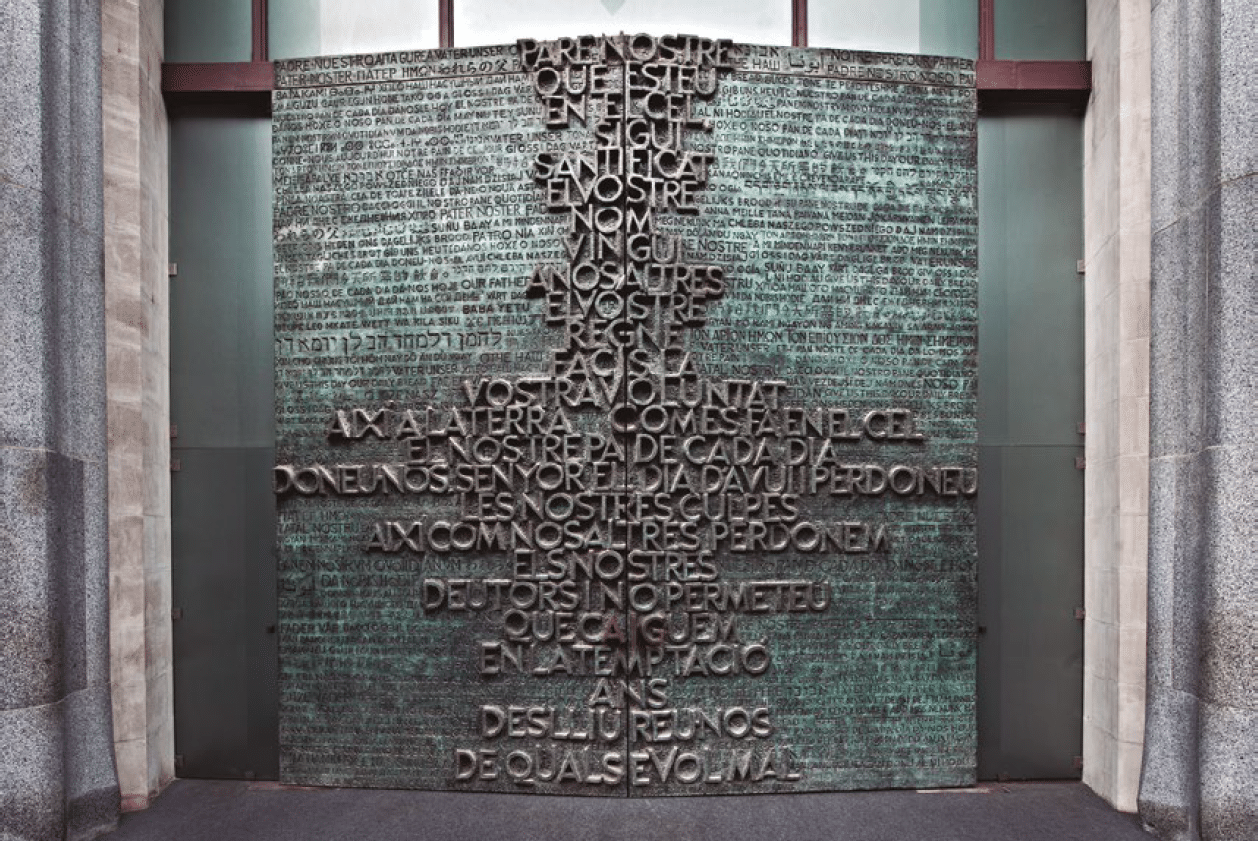
The seven bronze doors, created by Josep Maria Subirachs, represent the sacraments. The central door features the Lord’s Prayer in Catalan, while the surrounding architectural elements incorporate references to the works of mercy, the gifts of the Holy Spirit, virtues and sins.
These details show why the Glory Façade cannot be understood simply as the final exterior of the basilica. It is a carefully structured architectural and theological composition.
Its completion requires the coordination of monumental construction, decorative elements and the interpretation of Gaudí’s original models and plans.
The Urban Context of the Main Entrance
The staircase described in Gaudí’s project introduces a further dimension to the Glory Façade: its relationship with the streets and buildings surrounding the basilica.
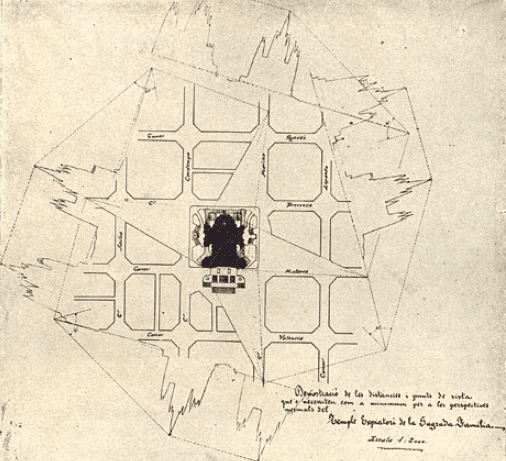
The official documentation establishes the intended arrangement of the staircase and the elevated structure over Carrer de Mallorca. It also identifies the location envisaged for the staircase in a plan dating from around 1908.
These historical documents help explain the scale of the original proposal and why the entrance must be considered in relation to the urban environment beyond the temple itself.
However, the original architectural design should not be confused with a final decision on every aspect of its implementation today.
The precise arrangements for the surrounding area, including any implications for existing buildings, require confirmation through the relevant official information and planning decisions.
For this reason, it is important to distinguish between Gaudí’s documented vision and the decisions that remain to be established for the project’s completion.
On 22 September 2026, representatives of the Sagrada Família’s Construction Board discussed the project and its implications for the surrounding buildings.
According to statements reported by 3Cat, the Construction Board clarified that the building on Carrer de Mallorca directly in front of the temple is essential to the construction of the staircase. It also subsequently clarified that the project would affect other buildings in the surrounding area.
What About the Sculptures and Artistic Programme?
The Glory Façade’s sculptural and symbolic programme is another important aspect of its development.
In its official information about the project, the Sagrada Família has described the religious and symbolic elements that will form part of the façade, including the monumental portico, the four towers and the representations associated with the history of humanity and Christian teachings.
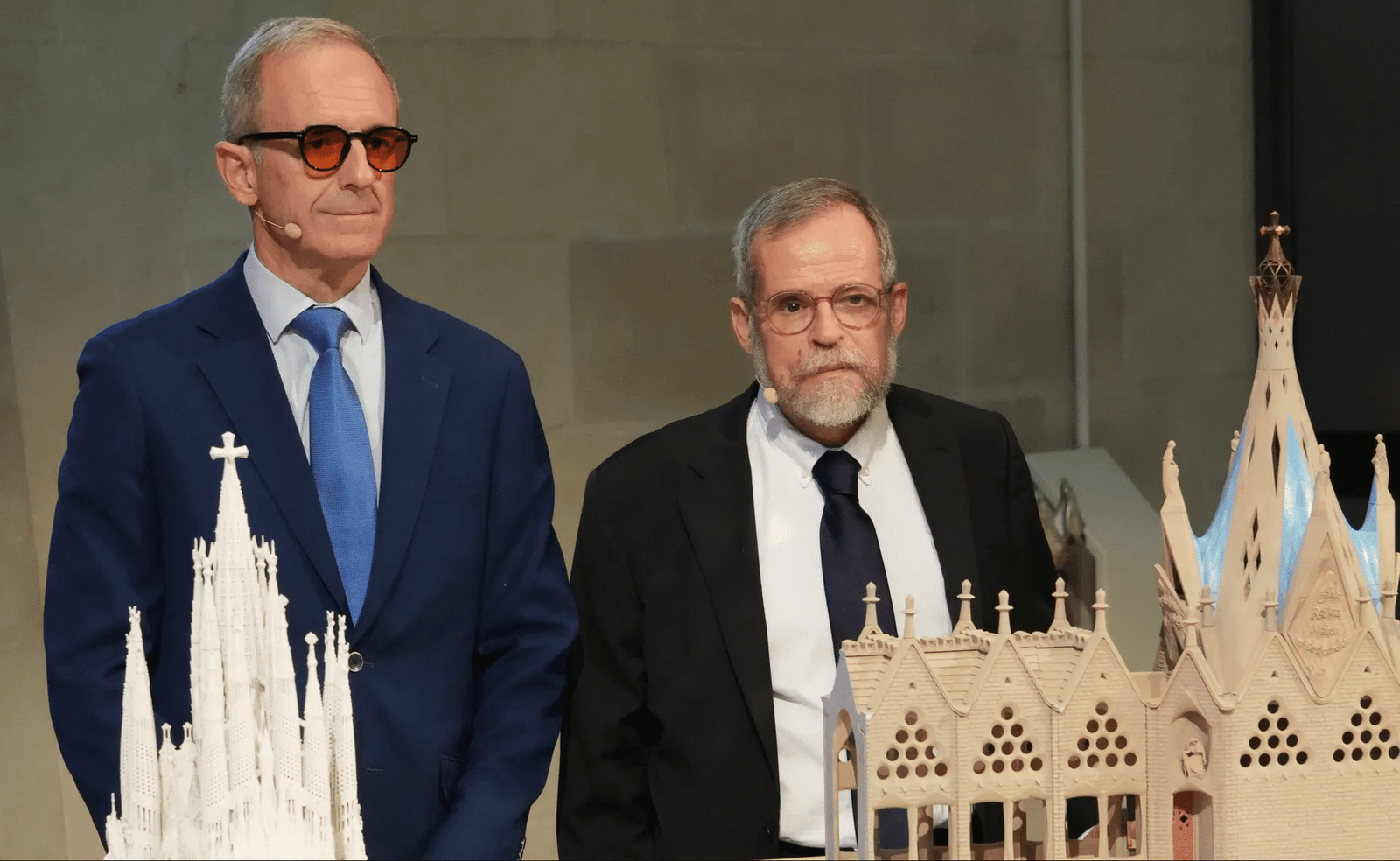
The Construction Board previously invited three internationally recognised artists — Miquel Barceló, Cristina Iglesias and Javier Marín — to develop artistic proposals for the façade.
According to 3Cat’s report of 22 September 2026, the proposals were still under consideration at that time. The basilica’s architectural director, Jordi Faulí, indicated that there was no deadline for making the decision and that selecting the appropriate artistic proposal was an important decision requiring time.
Consequently, the final sculptural design should not be described as settled.
As construction progresses, the basilica continues to develop the different components needed to bring the project closer to completion.
When Will the Sagrada Família Be Finished?
According to the Sagrada Família’s official update of September 2026, work continues on the Glory Façade, the Chapel of the Assumption and other elements of the temple. The remaining construction involves several different architectural components, each with its own requirements and stages of development. Rather than treating the completion of a single tower as the end of the story, it is more accurate to see it as one milestone within a much larger project.
The Glory Façade remains central to the final architectural composition of the Sagrada Família, and its progress will continue to shape the basilica’s appearance in the years ahead.
The Construction Board has expressed the hope that approximately ten years would be sufficient to complete the basilica, but this should be understood as an expressed aspiration rather than a confirmed completion date.
The timetable for the staircase and the façade’s remaining elements also depends on decisions that are not yet fully resolved.
For visitors to Barcelona, this means that the Sagrada Família remains a living architectural project. Each new phase brings another part of Gaudí’s vision into view, while other elements continue to develop.
Discover the Sagrada Família Beyond Its Towers
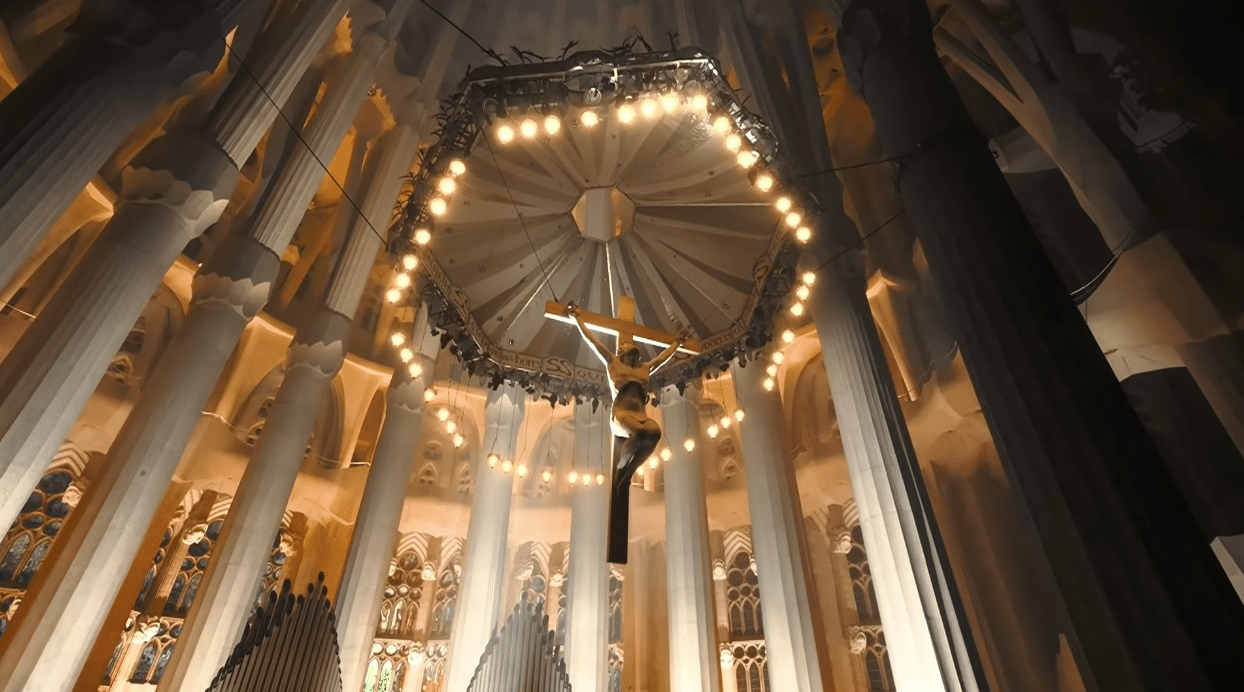
The Glory Façade offers a fascinating perspective on the Sagrada Família. It brings together Gaudí’s architectural imagination, the religious symbolism embedded throughout the temple and the practical challenges of completing a historic monument in a modern city.
Understanding its design makes it easier to appreciate why the basilica is much more than a collection of spectacular towers.
Every façade tells a different story. Every architectural detail has a purpose. And every new construction milestone brings another part of Gaudí’s vision into view.
When visiting Barcelona, take the time to look beyond the skyline and explore the ideas, craftsmanship and history that continue to shape one of the world’s most extraordinary architectural works.
Discover the Sagrada Família with Barcelona Private Tour Guide and explore Gaudí’s masterpiece with the context and insight it deserves.
Witness the Most Historic Day in the Sagrada Família’s Recent History
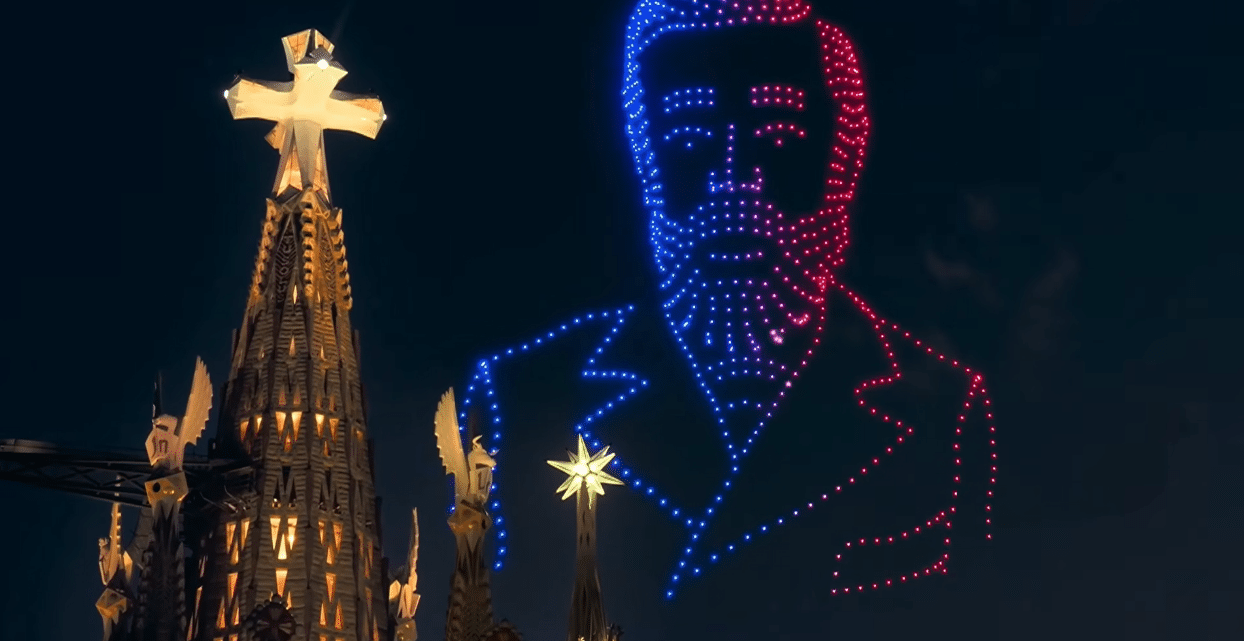
If you’re fascinated by Antoni Gaudí and the Sagrada Família, don’t miss what happened on 10 June 2026.
We were there to witness the extraordinary centenary celebration of Gaudí’s death, including Pope Leo XIV’s visit, the blessing of the Tower of Jesus and the unforgettable light spectacle that moved thousands of people in Barcelona and millions watching around the world.
Planning to Visit the Sagrada Família? Book Your Tickets in Advance
Book early and make sure you use the official website.
Tickets for the Sagrada Família can be difficult to find at short notice. Availability may already be limited if you wait until the week of your visit, or even just 15 days in advance. We strongly recommend booking as soon as tickets become available for your travel dates.
Be careful when booking online. Several third-party websites sell Sagrada Família tickets, and some use similar-looking domain names that can make them easy to confuse with the official website. Before paying, check the website address carefully and make sure you understand who is selling your tickets.
For official information and ticket purchases, visit the Sagrada Família’s official website.
Planning a private visit to the Sagrada Família?
Contact Barcelona Private Tour Guide well in advance. We’ll discuss your plans, help personalise your Barcelona experience to suit your interests and take care of the arrangements so you can enjoy your visit without the stress of planning every detail yourself.